

Top Animatronic Western Dragon Suppliers for Global Buyers

Global buyers choosing an Animatronic Western Dragon need more than a dramatic photograph. They need dependable movement, safe installation, durable materials, and service after delivery. A dragon’s head may turn smoothly under showroom lights, yet its wings can behave differently during long operating hours. Small details matter.

The 2023 TEA Global Experience Index, published by the Themed Entertainment Association and AECOM, reported approximately 244.6 million visits across the world’s 25 most-attended theme parks. That figure signals the scale of attraction operations, but it does not measure dragon sales or prove demand for any single effect. Buyers should treat it as context, not a product forecast. Ask suppliers for project references, motion-cycle testing, material specifications, maintenance schedules, and clear warranty terms.

Garner Holt, founder of Garner Holt Productions, is a recognized practitioner in themed-entertainment animatronics. His experience makes him a relevant voice for buyers evaluating creature design. However, without a verifiable source for a direct quotation, this guide will not put unconfirmed words in his mouth. That restraint matters. A supplier’s actual engineering evidence is more useful than a polished quote. This overview compares supplier capabilities, customization, production planning, and after-sales support, while recognizing that public information can be incomplete. The best choice may not be the most elaborate dragon; it may be the one your team can operate and maintain reliably.
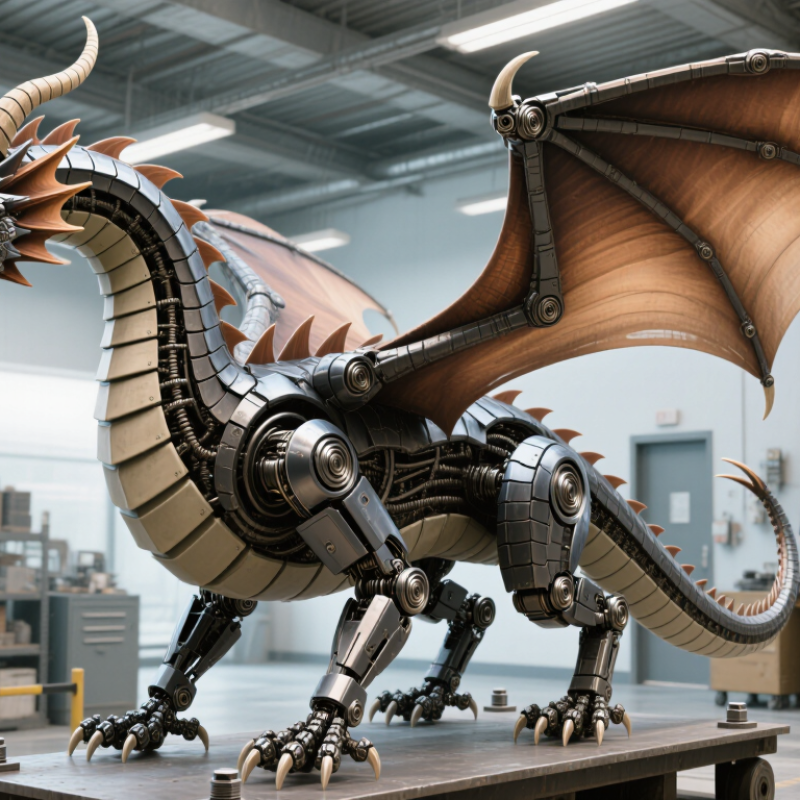
Top Animatronic Western Dragon Suppliers for Global Buyers

What Defines an Animatronic Western Dragon Supplier

A capable animatronic Western dragon supplier does more than build a convincing creature. It can explain how the head, jaw, neck, wings, and tail move, and what limits each motion. Ask for clear drawings, material specifications, and video of a working prototype. Small details matter: scale texture, eye placement, and the gap around a moving jaw affect the finished effect.

Reliable teams discuss venue conditions before quoting. Outdoor displays may need weather-resistant finishes, protected wiring, and service access. Indoor installations need stable bases and safe cable routing. A supplier should describe the control system, emergency stop, maintenance schedule, spare-part options, and realistic production timeline. Request documented testing, not only polished renderings. A short clip of repeated movement can reveal hesitation or noise.

Experience also shows in communication. Good suppliers ask about audience distance, daily operating hours, transport dimensions, and local technicians. They explain trade-offs plainly, including what cannot be reproduced within a given budget. Surprises happen. I would still verify measurements twice; shipping crates and venue doors have a way of disagreeing. Clear acceptance criteria, written support terms, and progress updates make international projects easier to manage.

Types of Suppliers Serving Global Buyers

Top Animatronic Western Dragon Suppliers for Global Buyers

Types of Suppliers Serving Global Buyers

Global buyers usually choose among three supplier types: full-service fabricators, creature-specialist studios, and component manufacturers paired with local integrators. Full-service teams can manage sculpting, mechanical design, skin fabrication, controls, and installation. That can simplify coordination. However, one supplier may not excel equally at every stage.

Creature specialists focus on expressive details: a dragon’s jaw movement, neck articulation, textured scales, and eye direction. Ask to see working samples, not only polished renderings. Component suppliers provide motors, control systems, sensors, or flexible skins; integrators then assemble and commission the finished figure. This setup may lower shipping volume, but it requires clear interface drawings and a named party responsible for troubleshooting.

Market context helps explain the range of offerings. Grand View Research estimated the global animatronics market at USD 6.9 billion in 2023 and projected a 9.7% compound annual growth rate from 2024 to 2030. That figure covers many applications, not Western dragons alone, so it should not be treated as a dragon-specific demand forecast.

For a global project, compare suppliers on motion cycles, maintenance access, spare-part lead times, and the clarity of their handover documents. Ask who will adjust the jaw after months of operation. Small details matter. A detailed proposal can still leave service responsibilities unclear, and buyers should resolve that before production begins.

How Western Dragon Animatronics Are Designed and Manufactured

A Western dragon animatronic begins with a design brief covering size, pose, movement, and display conditions. A clear brief matters. Designers turn sketches into a frame plan, checking balance before adding the body’s sculpted shape. The neck, jaw, eyelids, and wings need room to move without striking nearby structures. Even a small clearance issue can spoil a convincing motion.

Fabrication usually combines a metal support frame, powered joints, wiring, and a lightweight outer skin. Technicians select motors according to each movement’s load and speed, then route cables away from pinch points. Sculptors build scales, horns, and facial details over the structure, often using reference models to keep proportions consistent. The finish may look natural, but it must also tolerate handling and routine cleaning. That balance is not always easy.

Controls are configured to coordinate movements, sound, and lighting where requested. During testing, teams check travel limits, inspect joints, and run repeated movement cycles. They should also document setup needs, access panels, and basic maintenance tasks for the buyer. A dramatic wing sweep may look excellent in a workshop, yet prove impractical in a low-ceiling venue. Revising the motion can feel disappointing, but it is better than discovering the problem after delivery. Export packing and installation planning deserve attention too.

How to Compare Suppliers on Quality, Customization, and Safety

When comparing animatronic western dragon suppliers, look beyond dramatic showroom movement. A short demo is not enough. Request close-up footage of the neck, jaw, wings, and tail operating repeatedly, not just once. Ask what materials the frame uses, how joints are serviced, and which parts commonly need replacement. Clear answers matter. A supplier should provide maintenance intervals and explain how motion consistency is checked after assembly.

Customization should be judged by practical fit, not appearance alone. Share venue dimensions, audience distance, daily operating hours, and access routes before approving a design. Compare drawings, surface samples, movement limits, and revision terms. A sculpted scale pattern may look convincing, yet poorly placed seams can show under bright lights. I may be overcautious, but confirm who approves changes and whether revised parts affect the schedule or service plan.

Safety deserves equal weight. Ask for a documented risk review covering pinch points, stable anchoring, cable routing, accessible stop controls, and safe restart procedures. Request inspection records and observe a shutdown demonstration. Have qualified staff review installation and operating instructions for the intended setting. A confident sales conversation is useful, but evidence is better. If an answer stays vague, record that uncertainty before comparing prices.

Top Animatronic Western Dragon Suppliers for Global Buyers

How to Compare Suppliers on Quality, Customization, and Safety

Suggested buyer-defined evaluation weights—not measured supplier scores: build quality and durability (30%), customization (25%), safety documentation (25%), and delivery and after-sales support (20%). Adjust the weights to suit your project and verify each supplier’s claims with relevant documentation and references.

Global Ordering, Shipping, Installation, and Support

Global orders for an animatronic western dragon need more than a quoted production time. Share the finished dimensions, crate dimensions, total weight, voltage, control requirements, and delivery address before confirming freight. Ask for crate photos and a packing list. Details matter. A narrow doorway or low ceiling can complicate installation after delivery, even when the crate reaches the site safely.

Shipping schedules need realistic buffers. The World Bank’s 2023 Logistics Performance Index reports an average of about 44 days for goods to move from a country’s point of entry to their destination. UNCTAD’s Review of Maritime Transport 2024 reports that maritime trade grew 2.4% in 2023. These figures are not delivery promises; they show why buyers should confirm routing, freight mode, and customs-document responsibilities in writing. Oversized crates may need special handling, and port delays can disrupt installation dates.

Before dispatch, request clear wiring diagrams, labeled connectors, and a tested movement sequence. At the venue, check floor access, power supply, and safe clearance around the moving neck and tail. Remote video support can help with basic setup, but complex faults may require an on-site technician. Keep practical spare parts, such as fuses and connectors, available. One weakness in many project plans is relying on a single installation day. A small buffer is wiser, though it can feel inconvenient.

Top Animatronic Western Dragon Suppliers for Global Buyers - Global Ordering, Shipping, Installation, and Support

Anonymized supplier categories and indicative planning benchmarks for international projects
Supplier Category Typical Project Fit Ordering & Production Shipping Considerations Installation & Support Buyer Checks
Custom animatronic fabricator One-off dragons designed around a project brief, appearance, movement, and venue constraints. Usually quotation-based; drawings and feature approval precede fabrication. Build schedules are project-specific and can take several months. Crating and container requirements depend on the finished dimensions, weight, and whether the unit can be disassembled. Confirm whether commissioning is on-site, remote, or handled by a local technician; request operating and maintenance instructions. Approve drawings, motion limits, materials, electrical specifications, packing plan, and acceptance tests in writing.
Large scenic-effects manufacturer Feature installations for attractions, museums, themed venues, or large event environments. May coordinate the dragon with surrounding scenery, controls, sound, lighting, and show systems; allow time for integration reviews. Oversized components may need special handling, a suitable loading route, and advance checks of door, lift, and access dimensions. Installation may require a coordinated crew, site preparation, and commissioning around the venue’s schedule. Clarify the boundary between supplier work and local electrical, structural, fire-safety, and venue approvals.
Modular display and event supplier Portable displays where transport, repeated assembly, and compact storage are important. Ask which components are standard and which are custom; modular construction can simplify packing but does not guarantee a shorter lead time. Request packed dimensions, gross weight, crate count, and handling instructions before comparing freight quotations. Request assembly diagrams, a parts list, and training or remote guidance for local crews. Verify that repeated assembly is supported by replaceable connectors and clearly labeled components.
Local integration and service partner Projects needing in-country installation coordination, troubleshooting, or ongoing venue support. Often works alongside the equipment supplier; define who owns design approvals, procurement, and final sign-off. Can help coordinate local delivery and site access, but international freight and import responsibilities must be agreed separately. May provide local labor or service visits if qualified and contracted; confirm response times and geographic coverage. Confirm technical qualifications, scope, rates, spare-parts access, and escalation procedures with the original supplier.

Note: These are general procurement considerations, not verified offers from named suppliers. Lead times, freight schedules, duties, installation requirements, warranty terms, and regulatory approvals vary by design, destination, and contract. Confirm current details directly with the selected supplier and freight provider.

Go to Top