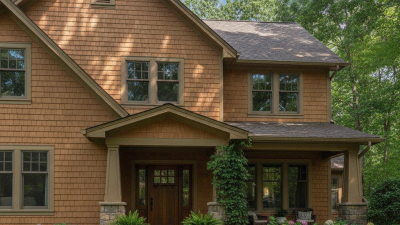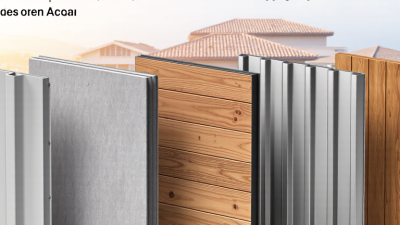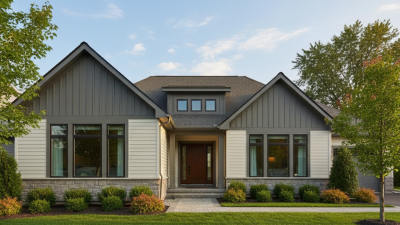

Global buyers evaluating China’s vinyl shake siding manufacturers need more than attractive product photos. They need clear specifications, consistent quality controls, dependable communication, and realistic delivery expectations. A textured shake profile can add visual depth to a home, but appearance alone does not reveal how well panels fit, resist weather, or retain their finish over time. Details matter.
This guide introduces factors buyers can use to compare manufacturers, including product range, customization, material information, packaging, and export support. Ask for current technical data and samples where practical. Check how the supplier explains installation requirements and handles quality concerns. A sample may look convincing, yet still leave unanswered questions about long-term performance. That deserves attention.
China has a broad manufacturing base, but suppliers differ in capability and transparency. No single company is automatically the right choice for every project. The best match depends on climate, design goals, order volume, budget, and the buyer’s own verification process. The following overview highlights manufacturers serving global buyers and offers a practical starting point for careful evaluation. Use it as a guide, not a substitute for due diligence.
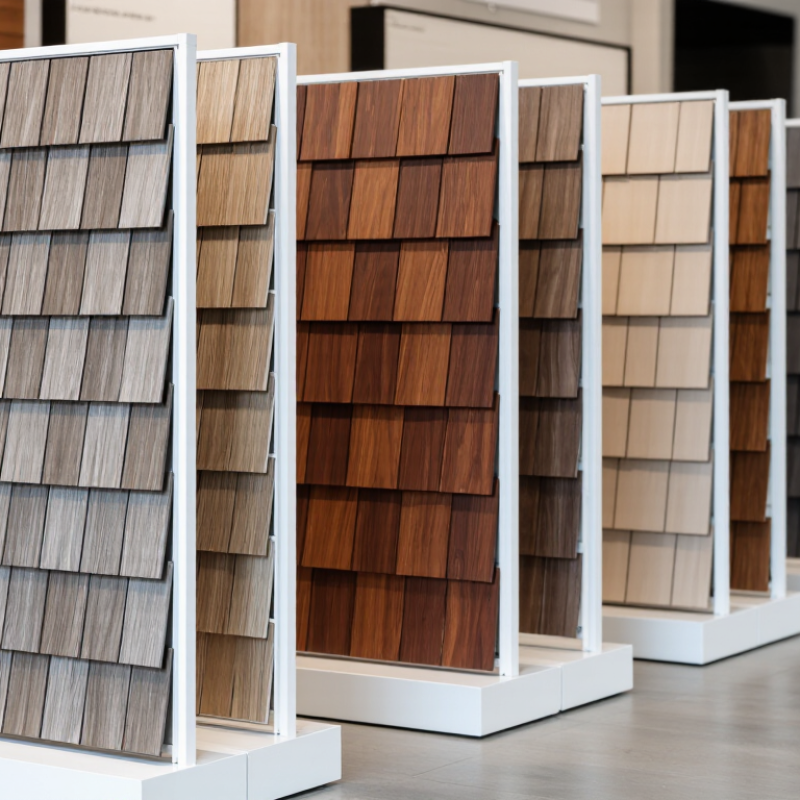
Vinyl shake siding uses rigid PVC formed into shingles, scallops, or staggered shake profiles. Molded woodgrain adds shadow and texture, but samples can look different in bright sun than under a showroom’s cool lights. Common nominal thickness is 0.040 inch, about 1.02 mm. It is a useful comparison point, not a guarantee of impact resistance or service life. ASTM D3679 sets performance requirements for rigid PVC siding; buyers should request current test documentation and confirm the profile is covered.
Profile choice changes the wall’s visual rhythm. Staggered shakes create a varied edge, while evenly aligned shingles look more formal. Check sample panels for grain depth, color consistency, and how the lower edge locks. Small details matter. A poorly seated panel can look uneven, even when the material itself meets specification. Installers should follow the manufacturer’s instructions for fastening and expansion clearance.
Market data offers context, not a quality verdict: the U.S. Census Bureau’s 2023 Survey of Construction, analyzed by the National Association of Home Builders, found vinyl siding on about 25% of completed new single-family homes. That broad category includes several siding styles, not only shake. For global purchasing, compare thickness, profile dimensions, test results, and packaging protection across suppliers. A low price can hide a mismatch in specifications. And “0.040-inch” alone says too little.
For global buyers comparing vinyl shake siding, ASTM D3679 offers a shared framework for assessing rigid PVC siding quality. It covers product requirements and test methods, but a standard reference alone does not prove a particular shipment meets them. Ask for recent, traceable test reports tied to the exact profile and product construction. Check the stated edition, specimen details, and results for applicable properties such as dimensions, impact resistance, and weathering performance. Details matter. A report for a flat siding profile may not represent a deeply textured shake panel.
Review the physical samples, too. Compare panel thickness, locking edges, and surface texture under consistent lighting. Ask how the product performs in relevant tests, including wind-load evaluation where applicable, and whether the tested configuration matches the proposed installation. A strong result is useful, not a promise of identical field performance. Installation, exposure, and maintenance still affect service life. Accelerated weathering can help compare samples, but it cannot reproduce every climate. This is easy to overlook. Buyers should also confirm the report’s laboratory, date, and sample identification before making a specification decision.
A key dimensional-stability check is heat shrinkage. The commonly cited ASTM D3679 limit is a maximum of 3%.
Use the current standard edition and an accredited laboratory report when evaluating products. This single benchmark does not represent a complete compliance assessment.
Chinese vinyl shake siding manufacturers typically begin with a controlled PVC compound. It may include stabilizers, impact modifiers, and weather-resistant pigments. Heated material passes through molds that create the panel shape and overlapping edges. Embossing rollers add cedar-like grain while the surface remains consistent. Small mold changes can affect shadow lines and installation fit.
Tips: Ask for sample panels from different production batches. Compare color outdoors, not only under factory lights. Check the locking edge by hand. It should engage firmly without excessive force.
Color matching requires more than adding pigment. Technicians measure lightness, undertone, and gloss against an approved sample. Darker shades often need additional heat control because they absorb more solar energy. Some factories use co-extrusion or protective surface layers for improved color retention. In my experience reviewing exterior panels, visual quality can look excellent while hidden thickness varies. That deserves attention.
Inspection normally covers length, width, thickness, embossing depth, and edge alignment. Quality teams may also test impact resistance, heat aging, freeze-thaw cycles, and accelerated ultraviolet exposure. A panel can pass appearance checks and still fail after repeated temperature changes. Manufacturers should record test conditions, not just pass results. Ask for batch numbers and inspection reports. Consistency is the real challenge.
The table summarizes common production methods and quality checks for vinyl shake siding. Product specifications and acceptance limits vary by manufacturer, profile, and destination-market requirements.
| Production or quality dimension | Common method or material | What buyers can verify | Relevant records or checks |
|---|---|---|---|
| Panel forming | Rigid PVC compound is heated and shaped through a profile extrusion die; downstream embossing or texturing creates a shake-like surface. | Consistent profile, texture, panel dimensions, interlocking edges, and nailing slots across sampled pieces. | Approved drawings, dimensional inspection records, and production samples. ASTM D3679 is a standard specification for rigid PVC siding. |
| Material formulation | PVC resin is compounded with processing additives, pigments, and, where specified, weathering stabilizers. Formulations are product-specific. | Documented material grade and controlled batching; confirm whether recycled content is used and where it is located in the product structure. | Material declarations, batch traceability, and agreed product specifications. |
| Color control | Pigments are incorporated into the compound or applied as a specified surface layer. Color is assessed against an approved physical standard or agreed instrument readings. | Color consistency between panels and production lots under agreed viewing and measurement conditions. | Retained color standard, batch identification, and a defined color-difference method; ASTM D2244 describes calculation of color differences from instrumentally measured color coordinates. |
| Cooling and sizing | The formed profile is cooled and calibrated before it is cut to length, helping the panel retain its intended shape and dimensions. | Straightness, cut length, edge condition, and fit of the locking features, checked against the approved drawing and tolerances. | In-process measurement records and inspection of panels from the start, middle, and end of a production run. |
| Surface and appearance inspection | Visual inspection under suitable lighting for surface defects, contamination, uneven texture, color variation, and damage. | Panels meet agreed appearance samples and show no unacceptable visible defects under the specified inspection conditions. | Written defect criteria, inspection checklist, and records linked to the production lot. |
| Performance verification | Testing is selected to match the product specification and the applicable market requirements; test methods and acceptance limits should be agreed before ordering. | Traceable test results for the specified product and configuration, rather than an unrelated material or profile. | Current test reports identifying the standard, sample description, test date, and laboratory. ASTM D3679 covers requirements for rigid PVC siding. |
| Packaging and shipment inspection | Panels are bundled or packed to limit movement and handling damage; packaging details depend on panel size, shipment method, and buyer requirements. | Correct quantity, clear lot identification, secure packaging, and protection of panel edges and surfaces. | Packing list, carton or bundle labels, final inspection record, and agreed pre-shipment inspection photos or report. |
When comparing China’s vinyl shake siding manufacturers, look beyond a quoted monthly capacity. Ask how many production lines make the profile you need, and whether output changes during peak seasons. A large factory may still have limited capacity for one color or texture. Request a recent production schedule and sample lead times. Details matter.
Certifications are useful only when their scope matches the product and market. Check issuing organizations, expiration dates, and covered materials. Ask for test reports on color retention, impact resistance, and performance after heat or moisture exposure. Reports should identify the tested profile and method. Export experience also counts: clear packing lists, protective corner packaging, and shipment references can reveal practical competence. Paperwork can look polished. Verify it.
Tips: Request production samples from more than one batch, then compare color and surface texture in daylight. Ask how defects are recorded and handled. Keep the answer in writing. One imperfect detail is worth discussing: a supplier may have strong testing but little experience with your destination’s shipping conditions. Clarify this before placing a large order.
China Top Vinyl Shake Siding Manufacturers for Global Buyers
Global buyers should treat wind ratings as tested performance, not marketing language. ASTM D3679 covers vinyl siding requirements, while ASTM D5206 addresses wind-load testing. Ask manufacturers for test pressure, installation direction, fastening pattern, and the tested substrate. A label stating “up to 180 mph” is incomplete without these details. NOAA reported 28 U.S. billion-dollar weather and climate disasters in 2023, showing why realistic wind exposure matters.
Installation details often determine the result. The installer should use corrosion-resistant fasteners, leave movement gaps at corners, and avoid driving nails tightly against the panel. Starter strips, J-channels, and roofline clearances need measurement records. For coastal projects, request salt-spray or corrosion-resistance evidence. Small errors become visible after one storm. I have seen panels buckle where expansion space was ignored.
Warranty review requires equal care. Check coverage for color change, cracking, wind damage, labor, replacement shipping, and transfer to a later owner. Many warranties become prorated after several years. Some exclude damage caused by incorrect installation or unusual weather. Request the complete written warranty before ordering. Compare its wind limit with local design loads under ASCE 7, rather than relying on a product brochure. A strong factory claim still needs a qualified installer and documented inspection.