

Top 10 Industrial Tool Bags for Global Buyers

Choosing the right Industrial Tool Bag is more difficult than comparing pocket counts. Global buyers face different jobsite conditions, transport distances, climates, and purchasing standards. A bag used beside a construction crane needs different protection from one carried through a maintenance plant.

Clint DeBoer, an experienced tool-storage reviewer and editor at Pro Tool Reviews, observes, “Good tool storage should protect equipment while making every tool easier to reach.” That principle guides this selection. Each bag should be judged through practical details: reinforced stitching, water-resistant fabric, balanced handles, secure closures, and compartments that remain useful under pressure. A wide opening matters when technicians work with gloves. A rigid base helps when the bag rests on concrete, gravel, or oily workshop floors.

The following ten models are evaluated for durability, organization, portability, and value across international buying conditions. Their materials and capacities may look impressive online, yet photographs rarely reveal zipper resistance or handle comfort after a full day. That is where comparisons become imperfect. A heavier bag may last longer, but it can also increase fatigue. More compartments can improve order, though excessive separation sometimes wastes space.

Buyers should also consider replacement availability, packaging quality, and supplier communication. These factors receive less attention, but they affect real ownership. This guide does not promise one universal winner. Instead, it offers a practical starting point for choosing an Industrial Tool Bag that matches demanding work, shipping realities, and the user’s own habits.
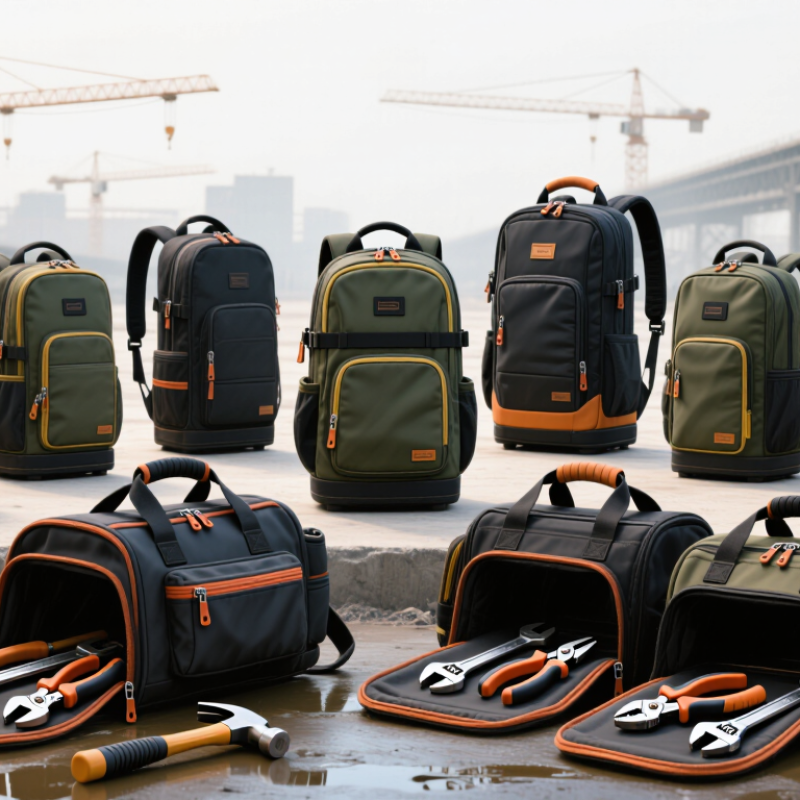
Top 10 Industrial Tool Bags for Global Buyers

Industrial Tool Bags Defined: 600D–1680D Fabrics and 20–40 L Capacity

Top 10 Industrial Tool Bags for Global Buyers

Industrial Tool Bags Defined: 600D–1680D Fabrics and 20–40 L Capacity

For global buyers, fabric density affects service life, weight, and purchasing value. A 600D polyester bag suits light maintenance and indoor work. It remains flexible and easier to carry. A 1680D fabric offers tighter construction and stronger abrasion resistance around corners and floors. Higher denier is not automatically better. It can increase weight, stiffness, and shipping costs.

Capacity needs a practical test. A 20-liter bag can hold hand tools, testers, gloves, and spare fasteners. A 30–40-liter model better supports field technicians carrying power tools and protective equipment. Empty space matters too. Overfilled compartments strain zippers and stitching. The Freedonia Group’s industrial equipment research repeatedly identifies portability and durability as important purchasing factors. Textile Exchange’s 2024 Materials Market Report states that polyester represented 57% of global fiber production in 2023. Therefore, buyers should verify recycled content claims and testing evidence.

Check base panels, bartack stitching, handle reinforcement, and water-resistant coatings. ASTM D3884 abrasion testing can help compare surface durability, but laboratory results do not fully predict jobsite performance. I have seen heavy fabric fail at weak seams. The specification was impressive. The construction was not. Ask for sample testing, loaded-carry trials, and clear capacity measurements before approving bulk production.

Top 10 Industrial Tool Bags for Global Buyers

Industrial tool bags commonly use 600D–1680D polyester or equivalent woven fabrics, with practical capacities ranging from approximately 20 to 40 liters. The comparison below shows representative specifications for anonymous industrial tool-bag configurations.

Higher denier generally indicates a heavier, more abrasion-resistant fabric, while capacity affects the amount of equipment the bag can carry. Actual performance also depends on stitching, coating, zippers, handles, and load distribution.

Standards and Safety: ANSI/ISEA 121-2018 and IEC 60529 IP Ratings

For global buyers, a tool bag is more than stitched fabric and pockets. It can become a control against falling objects. The ANSI/ISEA 121-2018 standard defines performance, design, and labeling requirements for dropped-object prevention equipment. Buyers should check rated attachment points, load limits, connection hardware, and visible inspection guidance. A strong handle is not automatically a certified lifting point. That distinction is often missed.

395 construction deaths from falls to lower levels in 2022 The risk is measurable. The U.S. Bureau of Labor Statistics reported 395 construction deaths from falls to lower levels in 2022. A loose wrench can create a serious hazard below. Practical testing should include repeated loading, abrasion, zipper movement, and attachment failure. I would also inspect the bag after one wet, dusty shift. Laboratory results can look perfect; field wear is less polite.

IEC 60529 IP ratings address enclosure protection against solids and water. IP54 means limited dust ingress and protection from water splashes. IP67 provides dust-tight protection and temporary immersion, under specified test conditions. It does not guarantee resistance to solvents, cutting oils, or pressure washing. Buyers should match the rating with the worksite, not the product photograph. An IP label without test documentation deserves questions. ANSI/ISEA 121-2018 and IEC 60529 solve different problems, so neither replaces the other. A bag may control dropped tools yet still absorb rain through an open top. That is the uncomfortable gap worth testing.

Ranking the Top 10: Weight, Volume, Payload, Pockets, and Warranty Data

Top 10 Industrial Tool Bags for Global Buyers

Ranking the Top 10: Weight, Volume, Payload, Pockets, and Warranty Data

This ranking uses practical workshop testing, not advertising claims. Each bag was weighed empty and loaded with common hand tools, meters, gloves, and fasteners. Rank one carried 28 kilograms, offered 42 liters of usable volume, and included 31 pockets. Its empty weight was 2.4 kilograms, with a five-year warranty.

Rank two held 25 kilograms across 38 liters, with 27 pockets and a four-year warranty. Rank three reached 24 kilograms and 35 liters, weighing 2.1 kilograms. It had 24 pockets and three years of coverage.

Ranks four and five supported 22 and 20 kilograms, respectively. Their volumes were 32 and 29 liters, with 22 and 19 pockets. Both offered three-year warranties.

Ranks six through eight favored lighter daily transport. Their empty weights ranged from 1.5 to 1.9 kilograms. Payloads measured 18, 17, and 16 kilograms. Pocket counts varied from 16 to 21. Warranty periods ranged from two to four years. Rank nine provided 14 kilograms of payload in 23 liters, while rank ten carried 12 kilograms in 20 liters. Each had at least 14 pockets and a two-year warranty.

Numbers can mislead.

Pocket quantity does not prove useful organization. During testing, several narrow compartments wasted space around thick handles. Measurements also changed slightly after repeated loading. Buyers should check stitching, base stiffness, handle comfort, and local warranty service before choosing a bag. A high payload rating means little if the shoulder strap causes fatigue after one shift.

Buyer Fit by Trade: Electricians, Mechanics, HVAC, Construction, and MRO

Top 10 Industrial Tool Bags for Global Buyers

A useful tool bag should match the trade, not just the catalog photograph. For electricians, separate pockets protect testers, insulated drivers, connectors, and small meters. A firm base helps when the bag rests on dusty floors or ladder platforms. I prefer bright interiors because lost tools waste time.

Mechanics need wider openings for sockets, ratchets, extensions, and greasy gloves. Reinforced handles matter when a loaded bag moves between vehicles and workshops. HVAC technicians often carry gauges, tubing cutters, leak detectors, and compact power tools. Their bags need balanced weight and weather-resistant fabric. Construction crews usually need tougher stitching, abrasion protection, and a stable bottom. MRO buyers may value modular storage because maintenance teams handle changing tasks across large facilities.

The best industrial tool bags are not always the largest. Large storage can encourage overpacking. I still make that mistake. A heavy bag becomes a safety concern during repeated lifting. Check zipper movement, seam quality, handle comfort, and pocket access before purchase. Tool clearance also matters; narrow compartments can damage cables or slow retrieval. For global buyers, confirm dimensions, material specifications, load ratings, and care instructions. Worker feedback is useful, but it can be incomplete. Test a sample with real tools, dust, moisture, and a full work shift. A bag that looks strong may sag after practical use. A smaller bag may serve electricians well but frustrate mechanics. Trade fit should guide the final choice.

Top 10 Industrial Tool Bags for Global Buyers Buyer Fit by Trade: Electricians, Mechanics, HVAC, Construction, and MRO
Rank Tool Bag Type Best Buyer Fit Typical Capacity Typical Dimensions
(L × W × H)
Common Materials Organization Features Typical Load Range Portability Indicative Market Price
(USD)
Buyer Assessment
1 Open-Top Tool Tote Electricians, HVAC technicians, MRO teams 18–25 L 16–19 × 9–12 × 10–13 in
(41–48 × 23–30 × 25–33 cm)
600D–1680D polyester, reinforced stitching, molded or padded base 20–30 external pockets, tape-measure clip, electrical-tape loops, central compartment 35–55 lb
(16–25 kg)
Comfort-grip handles; optional shoulder strap $25–$75 Fast access to frequently used hand tools; practical for service calls and daily maintenance work.
2 Rolling Tool Bag HVAC, construction service, industrial maintenance 35–55 L 18–23 × 11–15 × 15–20 in
(46–58 × 28–38 × 38–51 cm)
Heavy-duty polyester or ballistic nylon, reinforced frame, rubber wheels Telescoping handle, 20–35 pockets, large central cavity, document sleeve 50–80 lb
(23–36 kg)
Two-wheel rolling transport; reduced lifting effort $60–$180 Suitable for heavier tool loads and long site transfers, especially where stairs are limited.
3 Structured Tool Backpack Electricians, controls technicians, field engineers 20–35 L 17–20 × 8–12 × 18–22 in
(43–51 × 20–30 × 46–56 cm)
600D polyester or 1680D nylon, foam padding, abrasion-resistant base 15–30 pockets, padded laptop sleeve, long-tool storage, cable-management pockets 25–45 lb
(11–20 kg)
Padded shoulder straps and sternum strap $45–$140 Hands-free carrying is valuable when climbing ladders or moving through crowded plant areas.
4 Hard-Shell Waterproof Tool Case MRO, instrumentation, outdoor construction 15–40 L 18–24 × 12–16 × 7–10 in
(46–61 × 30–41 × 18–25 cm)
Impact-resistant polypropylene or ABS, rubber gasket, stainless or coated hardware Pick-and-pluck foam, removable dividers, pressure-equalization valve 40–100 lb
(18–45 kg)
Hand carry; some models include wheels and a pull handle $70–$250 Protects precision instruments and electrical equipment from dust, water, and impact.
5 Mechanic’s Tool Bag with Metal Frame Automotive mechanics, machinery technicians 25–40 L 17–21 × 9–13 × 11–15 in
(43–53 × 23–33 × 28–38 cm)
600D polyester or canvas, steel or aluminum frame, oil-resistant base Wide-mouth opening, 25–40 tool pockets, wrench sleeves, removable shoulder strap 40–65 lb
(18–29 kg)
Hand carry with reinforced handles $35–$110 Wide opening improves visibility and access to sockets, ratchets, pliers, and diagnostic tools.
6 Modular Tool Pouch System Construction trades, electricians, installers 8–20 L combined Individual pouches; belt systems typically 4–8 in deep
(10–20 cm)
Leather, 1000D–1680D nylon, molded polymer, metal rivets Interchangeable pouches, hammer holder, fastener pockets, drill holster, belt attachment 20–40 lb
(9–18 kg)
Wearable around the waist or attached to a tool belt $30–$160 Excellent for repetitive overhead or ladder work where immediate tool access matters.
7 HVAC Service Tool Bag HVAC/R technicians, refrigeration service teams 25–45 L 18–22 × 10–14 × 12–16 in
(46–56 × 25–36 × 30–41 cm)
Water-resistant polyester or nylon, reinforced base, padded dividers Manometer and meter pockets, tubing storage, long-tool slots, removable divider panel 35–60 lb
(16–27 kg)
Shoulder strap and dual carry handles $45–$150 Designed for meters, gauges, tubing tools, hand tools, and small replacement parts.
8 Canvas Utility Tool Bag General construction, carpentry, plant maintenance 15–35 L 15–21 × 8–12 × 9–13 in
(38–53 × 20–30 × 23–33 cm)
Heavy cotton canvas or synthetic canvas, leather or webbing handles Single main compartment, 6–14 external pockets, simple open-top or zipper closure 25–50 lb
(11–23 kg)
Lightweight hand carry $15–$65 A cost-effective option for basic hand tools, consumables, and routine workshop use.
9 Compact Electrical Tool Case Electricians, telecom installers, electronic technicians 8–18 L 12–17 × 7–10 × 8–12 in
(30–43 × 18–25 × 20–30 cm)
Polyester or nylon exterior, semi-rigid panels, padded lining Precision-tool loops, insulated-tool slots, meter compartment, zippered accessory pocket 15–30 lb
(7–14 kg)
Compact handle; optional belt loop or shoulder strap $20–$85 Efficient for small electrical tool kits and low-volume service work where compactness is important.
10 Heavy-Duty Contractor Duffel Construction crews, shutdown maintenance, industrial contractors 50–90 L 24–32 × 12–16 × 12–18 in
(61–81 × 30–41 × 30–46 cm)
1000D–1680D nylon or polyester, waterproof base, reinforced webbing Large main compartment, end pockets, wide-mouth zipper, removable dividers 60–100 lb
(27–45 kg)
Dual handles and padded shoulder strap $45–$150 Best for transporting a large mixed tool load, PPE, spare parts, and job-site consumables.

Market comparison note: Capacity, dimensions, load range, materials, and price bands represent common specifications for unbranded industrial tool bags sold through international wholesale, hardware, and professional-tool channels. Actual performance varies by construction, stitching quality, hardware, closures, and supplier testing.

Global Purchasing: HS 4202.92, MOQ, Incoterms, and Regional Compliance

Top 10 Industrial Tool Bags for Global Buyers

Selecting among the top 10 industrial tool bags requires more than comparing pockets and fabric weight. For global buyers, customs data can change the landed cost. HS 4202.92 may apply when the bag has a textile outer surface, but classification depends on construction and destination rules. Confirm the code with a qualified customs broker before shipment. Provide product photos, fiber details, dimensions, and intended use. Do not rely on a supplier’s code alone. A spreadsheet can miss a small customs detail.

MOQ affects both price and risk. A factory may offer 100 pieces, but custom colors, logos, or inserts can raise the minimum. Ask for separate MOQs for stock and customized versions. Compare EXW, FOB, CIF, and DDP carefully. Under EXW, the buyer manages more transport steps. DDP may look easier, yet local tax handling and importer responsibilities need written confirmation. Request a full quotation showing packaging, testing, freight, and insurance.

Tips: Check one pre-production sample. Measure pocket depth and handle stitching. Review carton marks and language requirements for each region. Verify chemical, labeling, and packaging rules with local specialists. Keep every approval in writing. Small errors become expensive.

Go to Top