
How to Find the Best Private Label Makeup Manufacturers?

Choosing among Private Label Makeup Manufacturers takes more than comparing prices or browsing polished product photos. A capable partner should help turn a product idea into a consistent, market-ready line, from shade selection and formula sampling to packaging and production planning. The details matter. A foundation that looks balanced under studio lights may appear different in daylight, while a lipstick can feel dry after several hours of wear.

A careful evaluation starts with questions you can verify. Ask for sample formulas, ingredient documentation, quality-control procedures, minimum order quantities, and realistic lead times. Check whether the manufacturer can support your product category and the requirements of your intended markets. Clear answers are useful; written specifications and traceable batch records are even better. If you are comparing two suppliers, request the same sample tests and packaging details from each. That makes the comparison more meaningful.

Look beyond the first sample. Test wear, texture, color consistency, and how the formula performs in its final container. Discuss who handles revisions, how defects are documented, and what happens when production timelines change. Communication is part of quality. It can be difficult to judge before a project begins. That is worth remembering. A low quote may still fit your plan, but only when its limits are clear. This guide outlines practical ways to assess suppliers, reduce avoidable surprises, and choose a manufacturing partner with evidence—not promises—behind its claims.
How to Find the Best Private Label Makeup Manufacturers?

Define Your Product Goals and Manufacturing Requirements

Before contacting private label makeup manufacturers, decide what the product must do. A tinted balm, liquid foundation, and pressed powder each need different textures, packaging, and production controls. Describe the finish, coverage, shade range, wear time, and target customer. Be specific. “Natural finish” can mean different things to different teams, so include reference descriptions or sample images.

Set practical manufacturing requirements too. Estimate your first order quantity, target unit cost, launch date, and preferred packaging materials. Ask whether the manufacturer can support formula development, shade matching, filling, and packaging assembly. Confirm minimum order quantities and sample fees in writing. Small details matter. A low quoted price may not include artwork setup, testing, or shipping, and those costs can change the budget.

Define the quality evidence you expect before comparing suppliers. Request ingredient information, relevant product safety documentation, batch records, and details about how incoming materials and finished goods are checked. Requirements vary by product and sales market, so confirm applicable obligations with a qualified regulatory professional. Then use the same brief with every manufacturer. Compare their answers, sample consistency, lead times, and willingness to explain limitations. A polished proposal is helpful, but it is not proof that production will go smoothly. Even a detailed brief may need revision after you test a sample; that is a normal, sometimes frustrating part of development.

Research Manufacturers That Match Your Brand and Product Needs

Choosing a private label makeup manufacturer starts with a clear product brief. Define the format, target price, shade range, and packaging before contacting suppliers. A cream blush may need different filling equipment from a pressed powder. Ask whether the manufacturer has made similar products and can support your planned production volume. Small details matter.

Request samples, then assess texture, scent, coverage, and how the product wears after several hours. Compare the sample with your written specifications, not just your first impression. Ask about minimum order quantities, sample fees, production timelines, and what happens if a batch misses agreed standards. Get answers in writing. A polished sample is useful, but it cannot show how every production run will perform.

Review the manufacturer’s quality procedures and request relevant product documentation. Check how ingredients, shade consistency, packaging compatibility, and batch records are handled. If you need custom colors or packaging, confirm what is feasible before paying for development. Communication is part of the evaluation: note whether replies are specific, timely, and easy to verify. I would not treat one promising call as proof of a strong fit; I have seen expectations become unclear when details stayed verbal. Ask practical questions, compare several suppliers, and leave room for delays or revisions.

Evaluate Capabilities, Quality Systems, and Regulatory Compliance

Choosing a private label makeup manufacturer requires more than comparing sample colors and unit prices. Ask how the team turns a product brief into a stable formula, and which steps it performs in-house. Request shade-matching records, batch sheets, and packaging compatibility results. A lipstick that looks smooth in a sample tube may drag after weeks of heat exposure. Ask what conditions were tested and whether results cover your exact packaging. Details matter.

Quality systems should be visible in routine records, not just polished audit language. Review procedures for incoming ingredients, production checks, lot identification, complaints, and corrective actions. If a defect appears, can the manufacturer trace affected units and explain its response? Request current certificates and check their scope, dates, and issuing body. A certificate alone cannot prove every product is consistently controlled.

Regulatory readiness needs product-specific evidence. Ask who checks ingredient restrictions, label claims, safety assessments, and required notifications for each intended market. Put responsibilities, document access, and change-control steps in writing. Some answers may remain imperfect. What matters is whether gaps are disclosed, assigned, and closed before launch. A careful buyer should still verify critical records independently.

Compare Minimum Orders, Costs, Lead Times, and Support

When comparing private label makeup manufacturers, treat minimum order quantity as a practical test, not just a number. Ask whether the minimum applies per shade, formula, or packaging style. A 500-unit order may sound manageable until it means 500 units of every color. Request a sample run or a written breakdown before committing. Small details matter.

Compare the full cost per sellable unit, including formula, filling, packaging, setup, and freight. A low production quote can hide expensive custom components. Ask which costs are estimates and which are fixed. Then compare lead times for sampling, revisions, production, and shipping separately. “Four weeks” may describe manufacturing alone. That matters. Build in time for a delayed component or a sample that needs another round; forecasts are not guarantees.

Support is harder to measure, so make it specific. Ask who answers technical questions, how often production updates arrive, and what happens when a batch misses agreed specifications. Request sample records and a clear quality-check process. Ask for evidence. A responsive sales contact is helpful, but reliable support should continue after the first order. One imperfect comparison can still be useful: score each manufacturer against the same questions, then revisit any assumptions that depend on verbal promises.

Test Samples and Select a Long-Term Manufacturing Partner

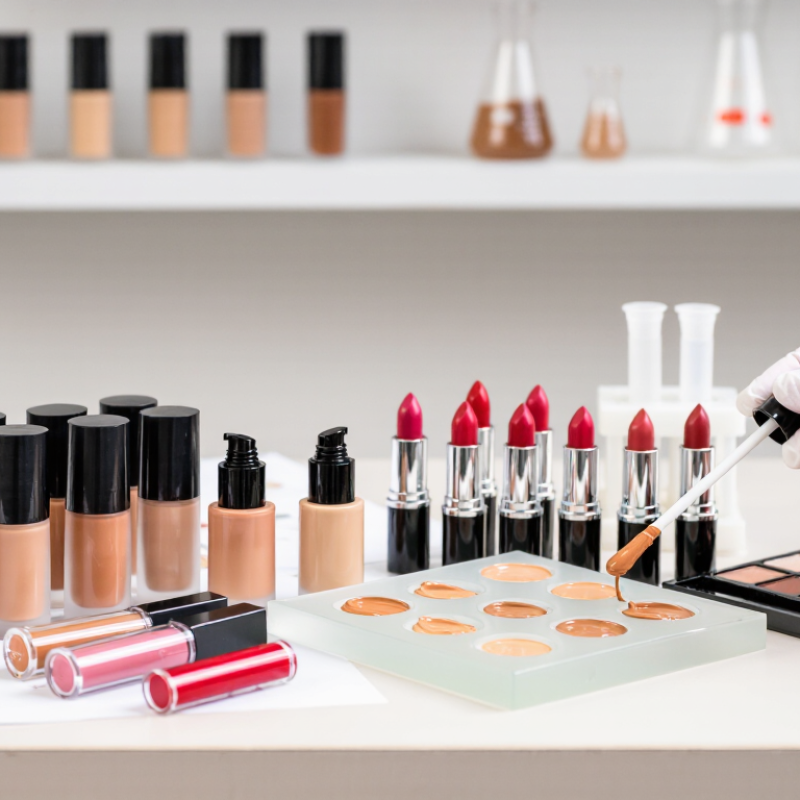
A polished sample is only a starting point. Test it under realistic conditions, not just under bright showroom lights. Check the shade in daylight and warm indoor lighting. Wear the product for several hours, noting texture, scent, transfer, and how it feels as it dries. Small details matter. Record your observations, including what you dislike, so feedback stays specific.

Test the formula in its intended packaging. A cream that performs well in a jar may behave differently in a pump. Check whether the cap leaks in a handbag, the applicator is easy to clean, and the label remains legible after handling. Ask for revised samples when needed, then compare them against your notes. It can be tempting to approve a sample because the deadline is close. That shortcut may create expensive rework later.

A long-term manufacturing partner should explain how it handles quality checks, production changes, and delays. Ask who reviews formula adjustments and how you will be notified before a change is made. Discuss realistic lead times and minimum order quantities before committing. Notice how clearly the team answers practical questions. One imperfect sample is not necessarily a deal-breaker; a vague response to a repeatable defect deserves closer attention. Keep written specifications and approval records, and confirm that the production sample matches the version you tested.

How to Find the Best Private Label Makeup Manufacturers? - Test Samples and Select a Long-Term Manufacturing Partner

Evaluation Area What to Test or Request Practical Acceptance Check Weight Score (1–5) Evidence and Notes
Product Sample Evaluation
Formula and brief match Compare the sample with the written product brief, including product type, finish, coverage, shade range, and requested ingredients or exclusions. Record each requirement as met, partly met, or not met. Resolve any ingredient or performance mismatch before approval. 15% To be scored Keep the approved brief and sample reference together.
Application and wear Test application, blendability, drying time, feel, transfer, and wear under the conditions relevant to the intended product. Use the same application amount and test conditions for every sample; document results rather than relying on memory. 15% To be scored Record tester, date, conditions, and observations.
Color and batch consistency Compare shades and appearance across multiple samples or batches when available, using consistent lighting and a documented reference. Agree on acceptable color and appearance tolerances with the manufacturer before production; do not assume visual checks replace instrumental testing where needed. 10% To be scored Retain an approved shade standard or reference sample.
Packaging compatibility Test the formula in the intended component for leakage, dispensing, clogging, staining, odor changes, and visible material changes. Check the filled package over an agreed evaluation period and under relevant storage conditions; document any failures. 10% To be scored Confirm the tested component matches the intended production packaging.
Stability and product safety support Request relevant stability, compatibility, and microbiological test plans or reports for the specific formula and packaging. Confirm that testing is appropriate for the product type and intended markets. Agree on outstanding tests and responsibilities before launch. 10% To be scored Ask for reports or a written testing plan; requirements vary by formula and market.
Manufacturing and Partnership Evaluation
Quality system and traceability Review quality procedures, batch records, raw-material controls, complaint handling, and recall or corrective-action processes. Confirm that production lots can be traced and that nonconformities are documented and investigated. 12% To be scored Request relevant, current documentation and clarify the scope of any certifications.
Regulatory documentation Ask what ingredient, safety, labeling, and product documentation the manufacturer can provide for each target market. Assign responsibility for review and approval in writing; verify that documents apply to the final formula and destination market. 8% To be scored Regulatory obligations depend on the product and markets in which it will be sold.
Capacity, MOQ, and lead time Obtain written MOQ, sample and production lead times, capacity assumptions, and re-order terms. Check that quoted timing and quantities fit the launch plan, and confirm what may change with packaging or formula revisions. 8% To be scored Compare like-for-like quotes using the same specifications and order quantities.
Communication and change control Assess response clarity, issue escalation, revision tracking, and how formula, supplier, or packaging changes are communicated. Confirm a named point of contact and written approval steps for changes that could affect product quality or specifications. 7% To be scored Evaluate communication throughout sampling, not only during initial discussions.
Weighted total Calculate each row as: score ÷ 5 × weight. Add the row results for a total out of 100. 100% To be calculated Use the same scoring method and evidence requirements for every manufacturer under review.

Scoring guide: 1 = does not meet requirements; 2 = major gaps; 3 = acceptable with follow-up; 4 = meets requirements; 5 = exceeds requirements with supporting evidence. Treat scores as an internal comparison tool, not a substitute for product testing, regulatory review, or a written quality agreement.

Article Source:

Go to Top