

China Top 10 Outdoor Lighting Manufacturers for Buyers

China has a broad outdoor-lighting industry, with manufacturers serving projects from garden paths to commercial streets. For buyers, the challenge is not simply finding a supplier. It is understanding what each company can reliably produce, document, and support after delivery.

This guide introduces ten China-based manufacturers for buyers comparing Outdoor Lighting options. It considers practical factors such as product range, customization, material choices, production experience, and communication. A catalogue may show a neat row of bollard lights or a bright wall fixture, but photographs alone cannot confirm how a product performs in a real installation. Ask for clear specifications, relevant test documents, and details about warranty and lead times. Small details matter.

The comparison is a starting point, not a final verdict. Public company information does not always reveal quality-control routines, project outcomes, or how quickly a supplier resolves problems. That gap deserves attention. Buyers should check claims directly and match each manufacturer’s strengths to the project’s location, budget, and technical needs. A decorative path light and a high-mounted street fixture do not face the same demands. Neither should be judged by the same checklist.

The companies featured here may suit different purchasing goals, from tailored designs to established product lines. Use the overview to create a shortlist, then ask specific questions before requesting a quotation. No ranking can replace careful verification.
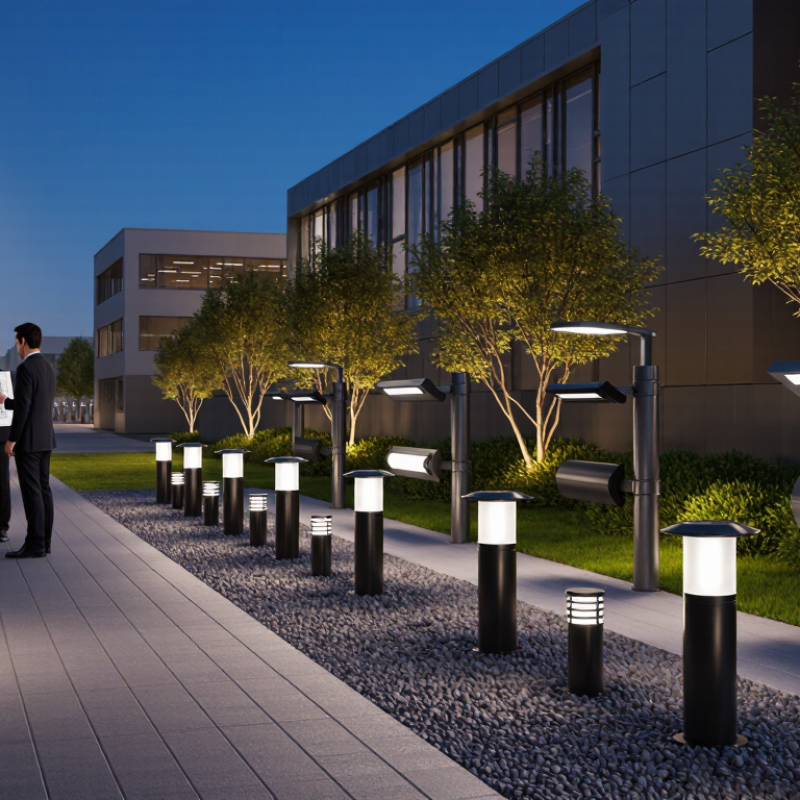
China Top 10 Outdoor Lighting Manufacturers for Buyers

China’s Outdoor Lighting Manufacturing Landscape

China’s outdoor lighting manufacturing landscape is broad, practical, and highly varied. Production is concentrated in several coastal industrial regions, where component suppliers, metal workshops, and assembly lines often operate within short shipping distances. This proximity can shorten development cycles. It does not guarantee consistent quality.

Buyers may find factories specializing in streetlights, garden fixtures, floodlights, or solar-powered systems. Ask how each product handles heat, moisture, corrosion, and voltage changes. Request test reports that match the exact model, not a similar-looking sample. Inspect cable glands, seals, and fasteners closely; these small details can reveal how a fixture may perform after months outdoors. Specifications matter.

Price comparisons need context. Housing material, driver components, optical design, and warranty terms all affect long-term value. A low quotation may exclude testing or customization, while a higher one may include options that are unnecessary for the project. Still, the landscape is uneven. Some suppliers communicate clearly; others need repeated clarification. Written drawings, sample checks, and agreed inspection criteria help reduce avoidable surprises before production begins.

Key Criteria for Selecting an Outdoor Lighting Manufacturer

For outdoor lighting projects, compare manufacturers by tested performance, not headline wattage. Ask for LM-79 photometric reports, verified lumen output, beam distribution, and color consistency. A road fixture should place light on the pavement, not into bedroom windows or the night sky. Check IP and IK ratings, operating-temperature limits, surge protection, and replaceable drivers. Small details matter.

Reliability deserves equal weight. Request LM-80 data and TM-21 projections for LED package lumen maintenance, plus clear warranty terms and evidence of thermal testing. A neat datasheet is not proof; independent test reports and traceable production checks make claims easier to assess. The U.S. Department of Energy’s 2019 solid-state lighting forecast projected annual U.S. lighting savings of 569 terawatt-hours by 2035. That is a sector-wide projection, not a guarantee for one outdoor installation. Ask suppliers to provide project-specific energy calculations, maintenance assumptions, and sample photometric files. Compare them under the same mounting height and operating schedule. A lower purchase price can still mean higher costs if the driver fails early or replacement parts are unavailable.

Profiles of 10 Leading Chinese Outdoor Lighting Manufacturers

China’s outdoor-lighting manufacturers serve projects ranging from city roads to coastal facilities. The International Energy Agency estimates that lighting uses about 15% of global electricity and produces around 5% of greenhouse gas emissions. That makes efficiency and maintenance central buying criteria, not minor specifications.

These ten profiles are capability-based, not a verified ranking of named companies. They cover roadway luminaires, solar streetlights, high-mast floodlights, tunnel systems, landscape bollards, façade projectors, port and yard fixtures, corrosion-resistant coastal lights, connected-control suppliers, and OEM/ODM integrators. Compare their published photometric files, ingress-protection ratings, thermal design, warranty terms, and spare-part availability. A useful detail is the heat sink: its size and finish can affect performance during hot summer nights.

The US Department of Energy reports that LED lighting can use at least 75% less energy and last up to 25 times longer than incandescent lighting. Those figures are useful context, but they do not guarantee a particular outdoor fixture’s service life. Ask suppliers for test reports and project references under similar conditions. One comparison gap remains: buyers often focus on unit price and overlook replacement access. A light that is difficult to reach can become expensive.

Products, Technologies, and Quality Standards to Compare

Buyers comparing China’s outdoor lighting manufacturers should look beyond wattage and price. Check luminous efficacy, measured in lumens per watt, and request independent photometric test reports. The International Energy Agency estimates that lighting uses about 15% of global electricity, making real-world efficiency a meaningful comparison. Ask whether reported results follow recognized methods such as IES LM-79, and compare beam distribution using actual road or site layouts. A bright fixture can still leave dark patches.

Tips: Check the exact product model, not just a sample report. Review ingress and impact ratings, surge protection, operating temperature, driver details, and warranty exclusions. For LED lifetime claims, ask for LM-80 data and TM-21 projections. These documents help distinguish measured evidence from marketing estimates. Small details matter.

Quality also depends on construction. Inspect sealed cable entries, gasket fit, corrosion-resistant finishes, and heat-sink surfaces; poor thermal design can shorten service life. The U.S. Department of Energy notes that LEDs use at least 75% less energy than incandescent lighting, but that comparison does not guarantee every outdoor fixture performs equally. Test it outdoors. A supplier’s neat specification sheet may hide installation or maintenance issues, so request a pilot sample and assess it after rain, dusk, and several operating hours. It is easy to overvalue polished paperwork.

How Buyers Can Verify and Source from Chinese Manufacturers

When assessing Chinese outdoor lighting manufacturers, verify the company’s legal business details and actual production address. Ask for a live video tour showing assembly lines, testing equipment, and finished goods. Useful evidence includes product drawings, material specifications, and recent quality records. A polished showroom proves little. Compare what you see with the factory’s stated capabilities, and ask who performs each production step.

Request samples that match the proposed order, not a specially prepared display unit. Check housing thickness, cable entries, seals, and finish quality. For outdoor fixtures, review ingress-protection test reports and confirm that the tested model matches your chosen design. Ask for photometric data and thermal-test results when performance matters. Reports should identify test methods and dates. Some documents may be incomplete; clarify gaps rather than assuming.

Put specifications, packaging, inspection criteria, and delivery milestones in writing. Keep a signed sample as a reference during production. Start with a manageable trial order, then arrange an independent pre-shipment inspection if the quantity or risk justifies it. Have the inspector check random units, labels, accessories, and carton markings. Small details matter. Confirm communication response times and agree how defects will be handled before paying a deposit. A careful process takes effort, and it can still miss something. But clear evidence makes sourcing decisions less dependent on promises.

China Top 10 Outdoor Lighting Manufacturers for Buyers – How Buyers Can Verify and Source from Chinese Manufacturers

Buyer’s evaluation framework: the entries below are product-specialist profiles, not named or ranked companies. Verify each supplier’s actual factory capabilities, test evidence, and product-specific compliance before placing an order.

Shortlist Profile Typical Product Focus Evidence to Request How Buyers Can Verify Relevant Checks and Standards
1. Road and street lighting specialist Roadway luminaires, pole-mounted LED street lights Photometric files, product specifications, driver and LED component details, sample test reports Match reports and photometric files to the exact model and configuration; arrange an independent sample inspection. Check IEC 60598-2-3 for road and street lighting luminaires, where applicable; confirm local electrical and roadway requirements.
2. Floodlight specialist Area, façade, sports, and industrial floodlights Beam-distribution data, thermal design information, ingress-protection evidence, mounting and aiming instructions Check that test samples, reports, and labels identify the same wattage, optics, housing, and accessories as the quotation. Check IEC 60598-2-5 for floodlights, where applicable; verify the stated IP rating against IEC 60529 test evidence.
3. High-bay and canopy lighting specialist Outdoor industrial areas, loading bays, covered walkways, and canopies Thermal test information, lumen and power data, mounting options, environmental limitations Confirm the product is rated for the actual installation environment, including temperature, moisture, and exposure conditions. Check the applicable luminaire safety standard and the product’s declared IP rating; do not treat an IP claim as proof of corrosion resistance.
4. Solar street-light specialist Integrated or separate-panel solar street-light systems Panel, battery, controller, and luminaire specifications; autonomy assumptions; charging and operating data Request the sizing assumptions for the project location and season; verify battery capacity and system performance on a sample. Check battery transport and safety documentation for the destination market, plus applicable luminaire and electrical requirements.
5. Bollard and pathway-light specialist Bollards, low-level pathway lights, and landscape luminaires Optical distribution, anchoring details, materials and finish specifications, drainage and sealing details Inspect samples for finish quality and assembly; confirm installation details suit the project’s ground and weather conditions. Check applicable luminaire safety requirements and verify any claimed impact rating against IEC 62262 test evidence.
6. In-ground and underwater-light specialist Ground-recessed, pool, fountain, and other wet-location luminaires Installation limits, sealing design, cable and connector specifications, applicable safety and ingress test reports Identify whether the intended use is submerged, exposed to water jets, or installed in soil; verify the exact product is rated for that use. Check IEC 60529 ingress-protection classification and the destination market’s specific rules for pools, fountains, or wet locations.
7. High-mast and sports-lighting specialist High-mast floodlights and large-area sports lighting Photometric files, aiming information, glare and spill-light data, structural and mounting information Have a qualified lighting designer review calculations against the project layout, mounting heights, and performance requirements. Check applicable floodlight safety requirements and project-specific sports, glare, spill-light, and structural criteria.
8. Architectural façade-lighting specialist Linear wall washers, façade projectors, and outdoor accent lighting Optical options, control protocol details, finish samples, wiring diagrams, and environmental ratings Test the proposed control system with the project controller and inspect finish samples under representative conditions. Verify the applicable electrical safety and EMC requirements for the destination market and the specific control configuration.
9. Hazardous-location lighting specialist Luminaires intended for classified hazardous areas Valid certificates, equipment marking, permitted area classification, installation instructions, and certificate schedules Verify certificates directly with the issuing body and confirm the exact model, variant, and installation conditions are covered. Confirm the required scheme and jurisdiction, such as ATEX or IECEx where applicable; ordinary IP or CE documentation is not a substitute.
10. Custom OEM/ODM outdoor-lighting specialist Project-specific housings, optics, controls, finishes, or private-label production Drawings, bill of materials, change-control process, sample approval plan, production quality records Approve a signed-off sample and golden sample; define inspection criteria and require written approval for component substitutions. Check product-specific safety, EMC, and market-access requirements; confirm test reports cover the final production configuration.
Practical sourcing checks: Verify the legal entity and factory address; ask whether production is in-house or subcontracted; validate certificates and reports with their issuers; compare the quotation, approved sample, and production specification; agree on inspection, payment, warranty, and change-control terms in writing. Standards and market-access requirements depend on the product and destination country.
Go to Top