

What Is China Chromium Carbide Overlay Plate?

China Chromium Carbide Overlay Plate is a wear-resistant steel product designed for equipment facing severe abrasion. It usually combines a tough carbon-steel base with a welded chromium-carbide layer. The base provides structural support. The overlay absorbs repeated contact from ore, cement, coal, sand, and other abrasive materials.

Tribology pioneer Peter Jost described tribology as “the science and technology of interacting surfaces in relative motion.” His definition explains why this plate requires more than a hardness number. Actual performance depends on carbide distribution, overlay thickness, welding quality, plate flatness, and the material causing wear. A plate used beneath a conveyor may need different properties from one installed inside a mining chute. Details matter.

Manufacturers in China commonly produce these plates through controlled hardfacing processes. They may use open-arc welding, submerged-arc welding, or related deposition methods. Chromium-rich carbides can create a hard working surface, while the steel backing allows cutting, forming, and attachment. However, these advantages are not unlimited. China Chromium Carbide Overlay Plate can resist abrasive wear exceptionally well, but it may perform poorly under heavy impact, sharp bending, or corrosive conditions. That limitation is easy to overlook.

Buyers should request chemical composition, hardness results, thickness tolerance, welding procedures, and inspection records. Independent testing can confirm whether published values match the delivered plate. Product descriptions alone are not enough. A careful selection process connects the plate’s microstructure with the machine’s real operating conditions. That connection is where reliable engineering begins.
What Is China Chromium Carbide Overlay Plate?

Definition and Basic Structure of China Chromium Carbide Overlay Plate

What Is China Chromium Carbide Overlay Plate?

Definition and Basic Structure of China Chromium Carbide Overlay Plate

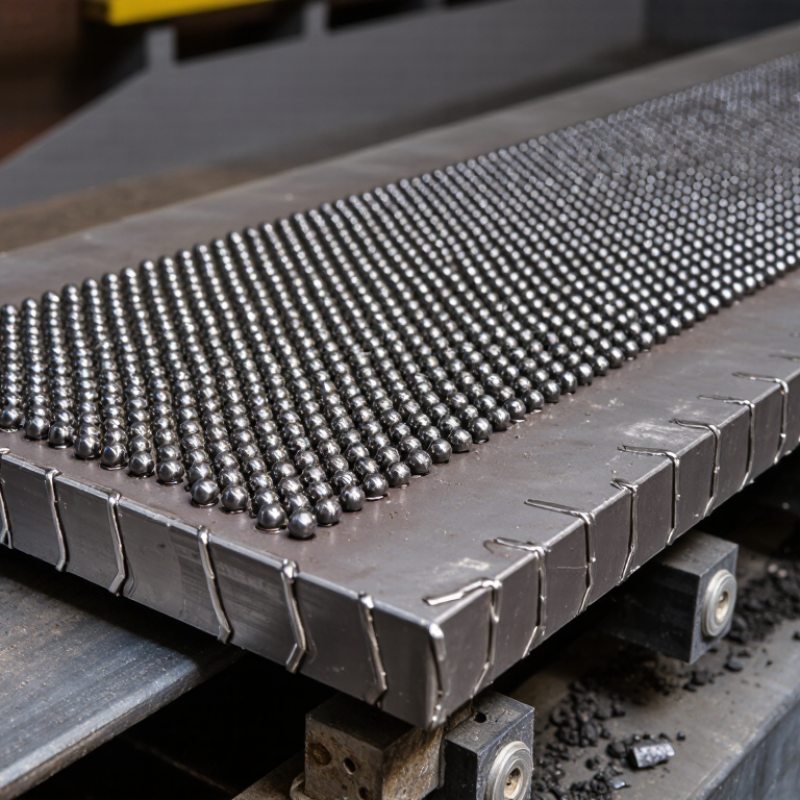
China chromium carbide overlay plate is a composite steel plate manufactured for severe abrasive wear. It combines a tough base plate with a harder welded surface layer. The base is commonly carbon steel or low-alloy steel. It provides strength, support, and weldability. The overlay contains chromium-rich carbides within an iron-based matrix. These hard particles resist sliding, impact, and material loss.

The structure is practical but not perfectly uniform. Weld beads may create visible ripples, small surface cracks, or slight thickness changes. Such cracks often release welding stress and do not automatically indicate failure. However, excessive cracking, poor bonding, or exposed areas require inspection. Plate performance depends on hardness, chemistry, overlay thickness, dilution, and operating conditions. A plate suitable for dry ore may perform differently in wet slurry. This detail is often underestimated.

Tips: Check the base thickness, overlay thickness, hardness range, and crack pattern before installation. Ask for material certificates and test records. Confirm cutting and welding methods with a qualified technician. Do not judge quality by surface appearance alone. Measurement matters.

How Chromium Carbide Overlay Plates Are Manufactured in China

What Is China Chromium Carbide Overlay Plate?

How Chromium Carbide Overlay Plates Are Manufactured in China

China’s chromium carbide overlay plates are engineered for severe abrasive wear. They usually combine a mild-steel base with a welded chromium-rich alloy layer. World Steel Association data reports China produced about 1,019 million tonnes of crude steel in 2023. This large industrial base supports broad plate-processing capacity and strict production controls.

Manufacturing begins with steel inspection, surface cleaning, and plate cutting. Automatic welding equipment then deposits alloy powder or wire in controlled passes. Heat input matters. Excessive heat may increase distortion, while insufficient fusion can weaken the bond. After welding, workers inspect cracks, measure overlay thickness, and check hardness. Ultrasonic testing may examine the base plate for internal defects. Abrasion performance is often evaluated with ASTM G65 procedures, although test results cannot fully predict every mine or cement-plant condition.

Tips: Ask for the base-steel grade, overlay chemistry, hardness range, and test method. Confirm whether the quoted thickness includes the base plate. Check flatness before installation.

Real production is not perfectly uniform. Small hardness variations can occur between weld paths. This is why experienced manufacturers record welding speed, current, voltage, and cooling conditions. A plate may look excellent but still fail if cutting creates excessive heat. Installation details deserve equal attention, especially bolt holes and unsupported edges. “Longer life” is useful only when measured against the original plate under similar working conditions.

What Is China Chromium Carbide Overlay Plate?

Chromium carbide overlay plates are wear-resistant steel plates made by depositing a chromium-rich alloy onto a carbon steel base plate. The typical overlay thickness is selected according to the severity of abrasion.

During manufacturing, the base plate is cleaned and prepared before a controlled welding process deposits the chromium-carbide layer. The deposited surface is then inspected for thickness, hardness, bonding quality, and visible cracking. The ranges shown are common engineering values and may vary by application and specification.

Key Properties and Performance Characteristics

What Is China Chromium Carbide Overlay Plate?

China chromium carbide overlay plate is a wear-resistant steel product made by welding a chromium-rich alloy onto a mild steel base. During production, hard chromium carbide particles form inside a tougher metallic matrix. This structure helps the plate resist sliding abrasion, gouging, and repeated contact with bulk materials.

Key Properties and Performance Characteristics

Its surface hardness commonly reaches about 55–65 HRC, depending on chemistry and production controls. The base plate provides structural support and practical weldability. The overlay handles direct wear from coal, cement, stone, sand, and similar materials. It can extend service life in chutes, hoppers, liners, feeders, and conveyor transfer points.

Performance depends on more than hardness. Carbide distribution, overlay thickness, plate flatness, and installation quality also matter. A very hard surface may resist abrasion well, but it can respond poorly to severe impact. That distinction is often overlooked. Plate sections may be cut with suitable plasma or abrasive methods, while drilling usually requires special tooling. Welding should follow controlled procedures to reduce cracking and distortion.

In operating plants, inspection should check cracks, exposed base metal, loose welds, and uneven wear. Temperature limits must match the actual alloy design. Some plates perform reliably under moderate heat, but not every grade suits continuous high-temperature service. Results can disappoint when material flow changes or particles strike at a sharper angle. Practical selection needs test data, wear conditions, and site experience rather than hardness figures alone.

Common Industrial Applications and Wear Conditions

What Is China Chromium Carbide Overlay Plate?

Chromium carbide overlay plate is a wear-resistant steel product with a hard alloy layer bonded to a steel base. The overlay contains chromium carbides within a tough metallic matrix. This structure resists severe sliding and impact abrasion. It is not a universal fix.

Mining, cement, steel, and power plants commonly use these plates. The USGS Mineral Commodity Summaries 2024 estimated global chromite mine production at about 41 million metric tons in 2023. That scale reflects chromium’s importance in industrial materials. In cement handling, the IEA’s Cement 2023 report recorded roughly 4.1 billion tonnes of global cement production in 2022. Conveyors, chutes, hoppers, and separator components therefore face constant abrasive loading.

Field conditions determine performance. Dry ore causes aggressive scratching, while wet slurry can combine abrasion with corrosion. Coal transfer points often need impact resistance when large particles strike the plate. Cement ducts experience fine, fast-moving dust and elevated temperatures. Overlay plates can protect against these conditions, but welding heat may create cracks. Those cracks are often stress-relief features, not automatic failures. Still, careless installation can shorten service life.

Maintenance teams should compare particle size, impact energy, temperature, and corrosion before selection. Plate thickness alone does not predict durability. In practice, operators should inspect feed zones, bolt areas, and weld edges regularly. A plate that performs well in a dry chute may disappoint in acidic slurry. Field records remain essential because laboratory wear results rarely reproduce every operating condition.

What Is China Chromium Carbide Overlay Plate? - Common Industrial Applications and Wear Conditions

Industrial Sector Typical Components Main Wear Condition Why CCO Plate Is Used Important Selection Considerations
Mining and Mineral Processing Chutes, hoppers, transfer points, screens, liners, and crusher surrounds Sliding abrasion and impact from ore, rock, coal, and mineral particles The chromium-carbide-rich overlay provides high resistance to mineral abrasion and can extend liner service intervals. Use a thicker or tougher construction where large rocks create repeated impact; support and fastening must prevent plate flexing.
Cement and Lime Plants Raw-material chutes, separator parts, mill liners, screw conveyors, and cyclone components Continuous dry abrasion from limestone, clinker, raw meal, and cement dust A hard overlay reduces material loss caused by fine, highly abrasive particles moving at continuous rates. Check operating temperature, particle velocity, and dust-control requirements; thermal expansion can affect large panels.
Steel and Metallurgical Plants Sinter plant hoppers, coke handling equipment, screens, chutes, and material bins Abrasive wear combined with elevated temperature and occasional impact The overlay offers a hard wear surface for bulk material handling applications where ordinary carbon steel wears rapidly. Confirm the actual service temperature; standard CCO products are not a universal solution for severe heat or thermal cycling.
Power Generation Coal feeders, pulverizer zones, ash hoppers, discharge chutes, and conveying systems Coal and ash abrasion, sliding wear, and localized impact The wear layer helps protect equipment exposed to abrasive fuel and combustion by-products. Evaluate moisture, ash chemistry, operating temperature, and the required plate shape before fabrication.
Pulp, Paper, and Biomass Handling Bark conveyors, biomass chutes, chip screens, hoppers, and ash-handling equipment Sliding abrasion from wood chips, bark, sand, ash, and other contaminated feedstock A wear-resistant surface can reduce maintenance on high-throughput transfer and storage equipment. Consider moisture and corrosive chemicals; CCO is primarily selected for abrasion, not as a dedicated corrosion-resistant alloy.
Glass, Brick, and Ceramics Batch hoppers, conveyor liners, mixer parts, chutes, and material guides Fine-particle abrasion from silica, sand, feldspar, clay, and ceramic powders The hard carbide structure is suitable for resisting repeated contact with mineral-based feed materials. Select a smooth surface or suitable overlay pattern where material flow and buildup are critical.
Recycling and Waste Processing Shredder liners, sorting chutes, conveyor transfer points, and feed hoppers Mixed abrasion, impact, gouging, and occasional contact with metal fragments The overlay can protect selected zones from abrasive waste streams and reduce replacement frequency. For severe impact or heavy gouging, a tougher alloy or impact-resistant steel may be more appropriate than standard CCO.
Dredging and Bulk Material Transport Dredge pipelines, pump liners, slurry chutes, elbows, and transfer boxes Erosive wear from high-velocity slurry containing sand, gravel, or mineral solids Hard carbide phases can improve resistance in selected high-wear zones exposed to particle flow. Inspect weld quality, hydraulic geometry, and possible corrosion; curved or continuously wetted parts may require specialized solutions.
General specification note: Chromium carbide overlay plate normally consists of a carbon-steel or low-alloy steel base with a welded iron-based wear layer containing chromium-rich carbides. Typical overlay hardness is often approximately 55–65 HRC, but the actual value, carbide distribution, thickness, weld pattern, and service performance vary by product design and application. It is generally strong in sliding and low-to-moderate impact abrasion, but it may be unsuitable for severe impact, heavy gouging, extreme heat, or corrosive service without application-specific evaluation.

Selection, Quality Standards, and Maintenance Considerations

What Is China Chromium Carbide Overlay Plate?

China chromium carbide overlay plate is a carbon steel base bonded with a wear-resistant alloy layer. The overlay contains hard chromium carbides within a tougher metallic matrix. It suits chutes, hoppers, feeders, and mining transfer points exposed to sliding abrasion.

Selection should begin with the failure mechanism, not hardness alone. Sliding ore needs high carbide content, while impact areas need stronger crack tolerance. Specify base thickness, overlay thickness, carbide distribution, weld dilution, and plate flatness. ASTM G65 abrasive-wear testing can compare mass loss between samples. ASTM E384 or ISO 6507 can verify microhardness. However, test results are not perfectly interchangeable. Laboratory wear rarely reproduces wet, hot, or high-impact service.

Quality documents matter. Request heat numbers, chemical analysis, hardness mapping, and test methods from the supplier. The World Steel Association reported 1,888.2 million tonnes of crude steel production in 2023, showing the scale of wear-intensive material handling. The USGS Mineral Commodity Summaries 2024 reported approximately 41 million tonnes of chromite mine production in 2023. These figures indicate broad demand, not automatic plate quality.

Maintenance should include scheduled visual checks and thickness measurements. Look for loose overlay, deep gouges, abnormal cracking, and exposed substrate. Fine transverse cracks may relieve welding stress, but spreading cracks require investigation. Avoid aggressive grinding that removes useful carbide layers. Replace sections before the base plate becomes thin. Field records are often incomplete, and that weakens future selection. A short inspection log can prevent repeated mistakes.

Go to Top