2026 Top Double Sliding Door Trends and Innovations?
As we approach 2026, the trends in double sliding door designs are evolving. Industry expert Robert James points out, "Double sliding doors enhance both aesthetics and functionality." His insights shed light on the innovations shaping this space.
The charm of double sliding doors lies in their versatility. They create seamless transitions between indoor and outdoor spaces. The growing preference for open-concept living boosts their popularity. Today, these doors are not just a practical choice; they impact a home's overall design.
Yet, challenges remain in the evolving market. Accessibility and energy efficiency must be prioritized in new designs. Homeowners are more demanding than ever. They seek doors that balance style with reliability and durability. Looking ahead, the future of double sliding doors promises exciting innovations that will redefine spaces.
Top Design Trends for Double Sliding Doors in 2026
As we look ahead to 2026, double sliding doors are evolving in design and functionality. Innovative features are becoming increasingly important. According to a recent industry report, around 55% of homeowners express a preference for eco-friendly doors. There is a notable shift toward sustainable materials. Recycled aluminum and responsibly sourced wood are gaining traction.
Modern aesthetics also play a crucial role in design trends. Clean lines and minimalistic designs are increasingly favored. Reports indicate that 70% of new constructions incorporate larger glass panels to enhance natural lighting. However, achieving the right balance between aesthetics and insulation remains a challenge. Some designs sacrifice energy efficiency for style.
Smart technology integration is another focal point. Many consumers are curious about automation options. Features like remote access and smart sensors are emerging. Yet, the learning curve can deter some users. It's crucial for manufacturers to simplify these innovations for broader acceptance. As we embrace these emerging trends, the journey involves constant reflection on functionality and user experience.
Innovative Materials and Technologies for Sliding Door Systems
As we move toward 2026, the landscape of double sliding doors is evolving rapidly. Innovative materials are becoming key players in this transformation. For instance, thermally broken aluminum is gaining traction. It offers excellent insulation and durability. This material helps maintain energy efficiency in homes. Glass, too, is embracing advancements. Low-emissivity coatings improve thermal performance while maximizing natural light.
Technologies are also enhancing sliding door systems. Smart sensors are now integrated. They allow doors to open and close automatically. This promotes accessibility and convenience. However, the reliance on technology can backfire. Malfunctions can occur, leading to frustration. Furthermore, the use of eco-friendly materials raises questions. Are they truly sustainable, or simply a trend?
The design possibilities are vast. Minimalist frames create a sleek look. Textured finishes offer a unique touch. Yet, simplicity can sometimes feel cold. Balancing aesthetics with functionality remains a challenge. Each innovation brings new questions. How do we ensure beauty doesn’t compromise practicality? Addressing these issues will shape the future of sliding door systems.
2026 Top Double Sliding Door Trends and Innovations
This chart displays the emerging trends in double sliding doors for 2026, highlighting the increasing popularity of eco-friendly materials and smart technology integration, alongside other important features like security, design flexibility, energy efficiency, and noise reduction.
Energy Efficiency Improvements in Double Sliding Door Design
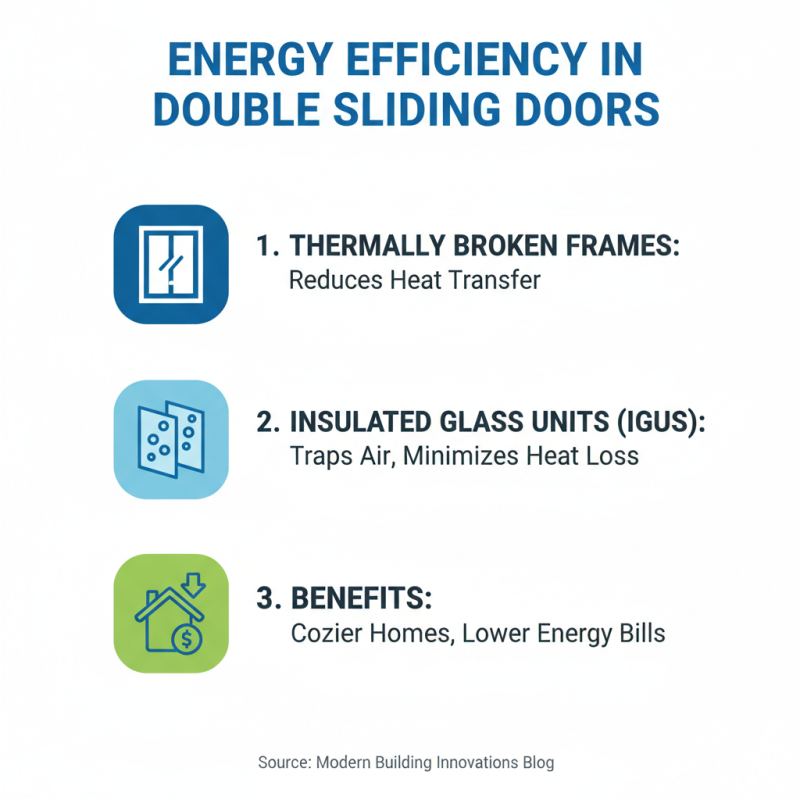
In recent years, double sliding doors have seen remarkable energy efficiency improvements. Modern designs focus on insulation. Thermally broken frames help reduce heat transfer. Insulated glass units (IGUs) are now standard. They trap air between panes, minimizing thermal loss. This innovation makes homes cozier and reduces energy bills.
Another trend is the use of smart technologies. Some sliding doors feature solar panels. This can power sensors and provide energy for smart features. Automatic closing and opening mechanisms are becoming common as well. However, not all technologies are reliable. Sometimes they malfunction, which can be frustrating for users.
Furthermore, aesthetics play a role in energy efficiency. Many homeowners want stylish designs that also save energy. However, balancing design and functionality is challenging. Some designs may look sleek but fail in performance. Consumers need to weigh their options carefully. Energy-efficient solutions are appealing but not always perfect. Evaluating products critically remains important.
Smart Home Integration: Double Sliding Doors and Automation
Double sliding doors are becoming integral to smart homes. With the rise of automation, homeowners can now control these doors remotely. Imagine arriving home with full hands. A simple tap on your smartphone can open the door for you. This convenience enhances the connection between indoor and outdoor spaces.
Tips for automating your double sliding doors include investing in quality sensors. These sensors can detect movement and adjust the doors accordingly. Also, consider voice activation systems. They make opening doors as easy as speaking a command. However, ensure a backup system is in place for emergencies.
Remember, automation can sometimes fail. Regular maintenance checks are essential. Sometimes the technology might not work perfectly. Be aware of these potential issues, and plan accordingly. Smart integration should make life easier, not create more hassle. Balancing innovation with practicality is key.
2026 Top Double Sliding Door Trends and Innovations
| Trend/Innovation |
Description |
Key Features |
Estimated Adoption Rate (%) |
| Smart Home Integration |
Integration with home automation systems for remote control and monitoring. |
Mobile app control, voice command, security alerts. |
45% |
| Energy Efficiency |
Design enhancements aiming to reduce energy consumption. |
Thermal insulation, low-E glass, airtight seals. |
60% |
| Biophilic Design |
Incorporating natural elements into sliding door design. |
Natural materials, large glass panels for light and views. |
50% |
| Automated Operation |
Mechanisms for hands-free opening and closing of doors. |
Motion sensors, remote controls, smartphone sync. |
40% |
| Enhanced Security Features |
Advanced locking systems and surveillance integration. |
Smart locks, intrusion sensors, camera compatibility. |
55% |
Customization Options: Personalizing Your Double Sliding Door Experience
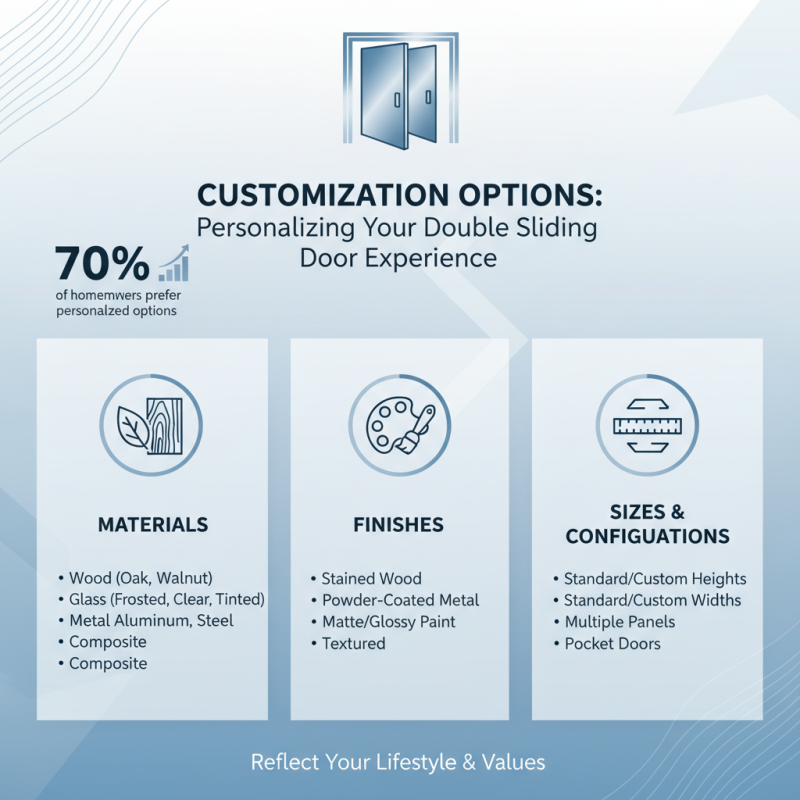
The trend of customization in double sliding doors is transforming spaces and lifestyles. Recent reports indicate that nearly 70% of homeowners prefer personalized options. This trend is not just about aesthetics; it reflects individual lifestyles and values. The ability to choose materials, finishes, and sizes makes these doors a unique feature in any home.
The materials available range from traditional wood to modern aluminum. Each option impacts durability and insulation. Reports show that energy-efficient designs appeal to over 80% of buyers. There’s a growing preference for eco-friendly materials. Homeowners are increasingly concerned about sustainability, pushing the market towards greener choices.
However, customization also has its challenges. With so many options, making a decision can feel overwhelming. Some may struggle to find the right balance between style and functionality. Additionally, the cost of customization can be a deterrent. While options abound, they may not fit every budget, leading to a gap between desire and reality.