

2026 Best Shingle Siding Types for Global Buyers?
Choosing the best shingle siding in 2026 requires more than comparing colors, textures, and showroom samples. Global buyers must assess climate, installation skill, maintenance access, fire performance, and long-term replacement costs. A beautiful cedar-look panel may struggle beside a humid coastline. A low-cost option may demand expensive repairs after repeated freeze-thaw cycles.
Industry data offers useful direction, but it has limits. The U.S. Census Bureau’s 2023 American Housing Survey provides valuable evidence on housing age, condition, and repair activity. However, it does not isolate every shingle siding material. NAHB’s recent housing cost research also shows how labor and material expenses influence exterior product decisions. That matters when imported panels, local fasteners, and skilled installers create different total costs. Global buyers should also consult the International Energy Agency’s buildings-sector reports, especially when choosing exterior systems that support moisture control and thermal performance.
This guide compares engineered wood, fiber cement, vinyl, polymer, and composite shingle siding for practical international purchasing. It considers appearance, weather resistance, installation requirements, warranty language, and lifecycle value. Real projects are rarely perfect. Supplier claims can sound stronger than field evidence. Therefore, buyers should request test standards, sample panels, installation manuals, and references from similar climates. Small details matter: exposed fasteners, poorly sealed corners, and trapped water can shorten service life. The best choice is not always the most expensive. It is the system that matches the building, climate, installer, and maintenance plan.
What Is Shingle Siding and How Does It Work?
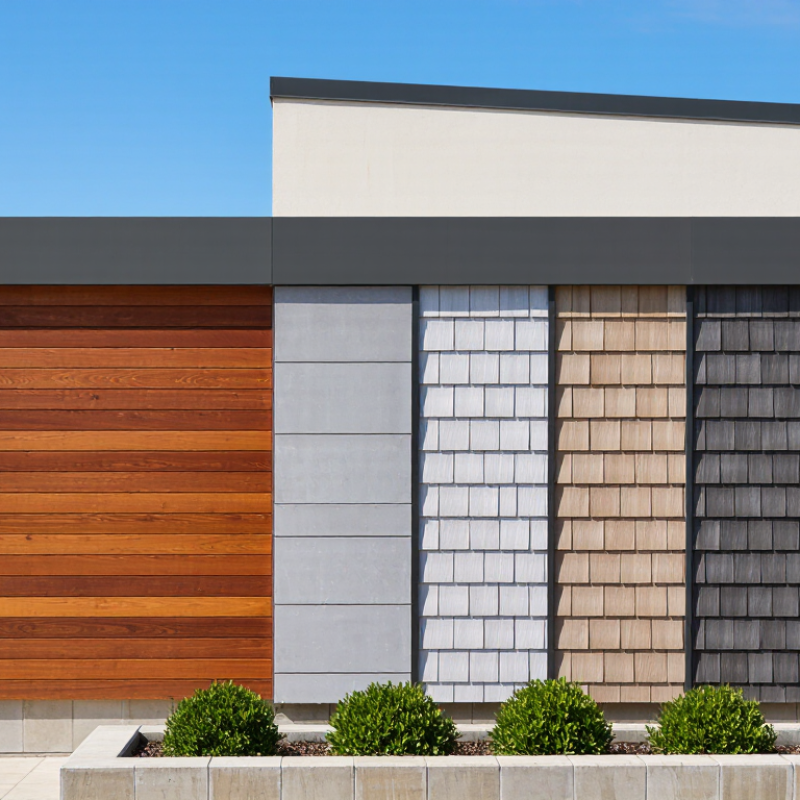
Shingle siding consists of small, overlapping pieces fixed to a wall. Each piece sheds water onto the one below it, much like roof shingles. However, it is not the wall’s complete waterproofing system. Behind the cladding, a weather-resistive barrier, flashing, and drainage space guide moisture away. Without these layers, even attractive siding can trap water around windows and corners. Not always.
Common options include natural wood, engineered wood, fiber cement, composite, and metal. Wood offers warm grain but needs regular coating in wet climates. Fiber cement resists insects and fire better, yet it weighs more and requires careful cutting. Composite products can reduce maintenance, although their long-term performance varies by formulation. Global buyers should examine local humidity, wind exposure, salt air, and installer experience before comparing prices.
The U.S. Census Bureau’s 2023 Survey of Construction shows vinyl siding appeared on roughly one-quarter of new single-family homes, confirming the importance of low-maintenance cladding in residential construction. The National Association of Home Builders also identifies exterior finishes as a meaningful share of construction costs, making installation quality financially important. In practice, I have seen failures caused less by the shingle material than by missing flashing or tight butt joints. That detail deserves more attention. Manufacturer instructions and applicable building standards should control spacing, fasteners, and ventilation, because regional practice is not always reliable.
2026 Best Shingle Siding Types for Global Buyers? - What Is Shingle Siding and How Does It Work?
A practical comparison of shingle siding materials, performance, installation requirements, maintenance, and typical cost considerations.
| Shingle Siding Type | What It Is and How It Works | Typical Service Life | Indicative Installed Cost | Maintenance Level | Weather and Fire Performance | Installation Notes | Best Fit for Global Buyers |
|---|---|---|---|---|---|---|---|
| Natural Wood Shingles or Shakes | Thin shingles or thicker hand-split shakes made from naturally durable wood. Overlapping courses shed rain while allowing the wall assembly to dry. | Approximately 20–40 years with suitable species, ventilation, detailing, and regular maintenance. | About $7–$15 per sq. ft. | High. Requires periodic staining or sealing, inspection, cleaning, and replacement of damaged pieces. | Good rain and wind performance when correctly installed; vulnerable to moisture-related decay, insects, and wildfire unless treated and approved for the local fire zone. | Needs a drained and ventilated wall assembly, corrosion-resistant fasteners, appropriate clearances, and careful flashing around openings. | Traditional, coastal, rural, and heritage-style buildings where natural appearance and repairability are priorities. |
| Fiber-Cement Shingles | Cement reinforced with cellulose fibers and formed into overlapping shingle panels or individual pieces. The dense material creates a stable, low-maintenance rainscreen cladding. | Approximately 30–50 years when installed and maintained according to the product specification. | About $6–$14 per sq. ft. | Low to medium. Usually requires periodic repainting or coating maintenance and inspection of joints and penetrations. | Resistant to rot, termites, and non-combustible under applicable testing standards; performs well in sun, rain, and moderate wind when detailed correctly. | Heavier and more brittle than vinyl; requires suitable cutting tools, dust control, proper flashing, and adequate structural support. | A strong all-round option for buyers seeking a painted wood-like appearance with improved fire and moisture resistance. |
| Engineered Wood Shingles | Wood fibers, strands, or veneers are bonded with resins and shaped into shingle profiles. Factory-applied coatings help protect the surface and improve color consistency. | Approximately 20–35 years, depending on coating quality, exposure, ventilation, and maintenance. | About $5–$12 per sq. ft. | Medium. Requires coating inspections, prompt repair of exposed edges, and good moisture control. | More uniform and dimensionally stable than many solid-wood products; fire performance depends on the tested assembly and local certification. | Lighter and easier to cut than fiber cement; installation must maintain required clearances and avoid trapped moisture. | Projects wanting a wood appearance, consistent sizing, and a moderate balance between cost and performance. |
| Vinyl Shingle Siding | PVC-based molded panels or individual shingle profiles attached over a weather-resistant wall layer. Interlocking edges and overlap help direct water away from the wall. | Approximately 20–40 years, depending on climate, impact exposure, color, and installation quality. | About $4–$10 per sq. ft. | Low. Normally needs washing and inspection of fasteners, joints, and damaged panels. | Does not rot or rust and handles moisture well; may expand, contract, crack from severe impact, or deform under extreme heat. Combustibility and fire-rating requirements must be checked locally. | Fast installation with common tools; panels must be loosely fastened to allow thermal movement and must not be installed over a wet or poorly drained wall. | Budget-sensitive residential projects in moderate climates where low maintenance and lighter weight are important. |
| Metal Shingles | Stamped or formed steel, aluminum, zinc, or copper pieces installed in overlapping courses. The interlocking or lapped layout creates a durable water-shedding outer skin. | Approximately 40–75+ years, depending on metal type, coating, atmospheric exposure, and maintenance. | About $8–$18 per sq. ft. | Low to medium. Requires inspection for coating damage, corrosion, loose fasteners, and incompatible metal contact. | Excellent resistance to rot, insects, and wind when properly secured; generally non-combustible. Coastal salt, hail, thermal movement, and galvanic corrosion require special consideration. | Requires compatible flashings, isolation between dissimilar metals, accurate fastening, and attention to noise and condensation control. | High-wind, wet, cold, or fire-prone regions where long service life and low biological degradation are priorities. |
| Composite or Polymer Shingles | Manufactured from polymer blends, recycled plastics, mineral fillers, or other engineered compounds molded to imitate wood or slate textures. | Approximately 30–50 years, subject to ultraviolet exposure, impact resistance, formulation, and installation quality. | About $7–$16 per sq. ft. | Low. Usually involves cleaning and periodic inspection of joints, fasteners, and surface color. | Good resistance to rot, insects, and moisture; fire, ultraviolet, hail, and wind performance must be verified through product-specific testing. | Often lighter than fiber cement or masonry; follow the specified fastening pattern, ventilation requirements, and expansion clearances. | Design-led projects needing a wood, slate, or historic appearance with reduced maintenance and consistent manufacturing. |
| Stone or Slate-Style Shingle Cladding | Thin natural stone, slate, or manufactured stone pieces installed with overlapping joints or a mechanically supported veneer system to shed water and protect the wall. | Approximately 50–100+ years for suitable natural materials when the supporting system and detailing remain sound. | About $12–$30+ per sq. ft. | Low to medium. Cleaning is limited, but joints, anchors, flashings, and individual cracked pieces require inspection. | Excellent resistance to ultraviolet light, moisture, and fire for many natural stone products; weight, freeze-thaw behavior, and seismic requirements must be evaluated. | May require structural assessment, specialized installers, robust flashing, movement joints, and a dedicated drainage plane behind the veneer. | Premium, long-life projects where appearance, permanence, and fire resistance justify higher material and structural costs. |
Related Posts
-
How to Choose the Best Shingle Siding for Your Home Based on Durability and Cost
-
2025 Top 10 Bathroom Renovation Ideas for Stylish and Functional Spaces
-
Top Benefits of Insulated Vinyl Siding for Your Home?
-
2026 Best Sliding Back Door Options for Your Home Design?
-
How to Choose the Best Vinyl Shake Siding for Your Home in 2025
-
How to Choose Board and Batten Vinyl Siding for Your Home?