2026 Top Faux Wood Wall Panels Which Type Is Best?
Choosing Faux Wood Wall Panels in 2026 is less about finding one universal winner and more about matching the panel to the room. A kitchen backsplash needs wipeable surfaces and dependable moisture resistance. A bedroom accent wall can prioritize texture, color, and easy installation. Some panels look convincing from across the room but less so beside a window, where glossy finishes and repeated grain patterns become obvious. Details matter.
The U.S. Environmental Protection Agency estimated that the United States generated 600 million tons of construction and demolition debris in 2018; demolition accounted for most of it. That national figure does not measure faux wood panels or prove that any one panel is environmentally preferable. It does, however, make durability, repairability, and end-of-life choices worth checking before purchase. Look for product-specific care instructions, emissions information, and installation requirements—not just attractive product photos.
Architect Alex de Rijke, known for work with engineered timber, has described plywood as “the new concrete.” His remark concerns plywood, not faux wood panels, but it points to a useful design question: how can wood-like surfaces shape a space? The answer depends on the material beneath the finish. PVC, polystyrene, fiberboard, and composite panels differ in weight, moisture tolerance, and repair options. None is perfect for every room. This guide compares the main types, explains their trade-offs, and helps identify which choice fits your project, budget, and maintenance expectations.
What Faux Wood Wall Panels Are and How They Are Made
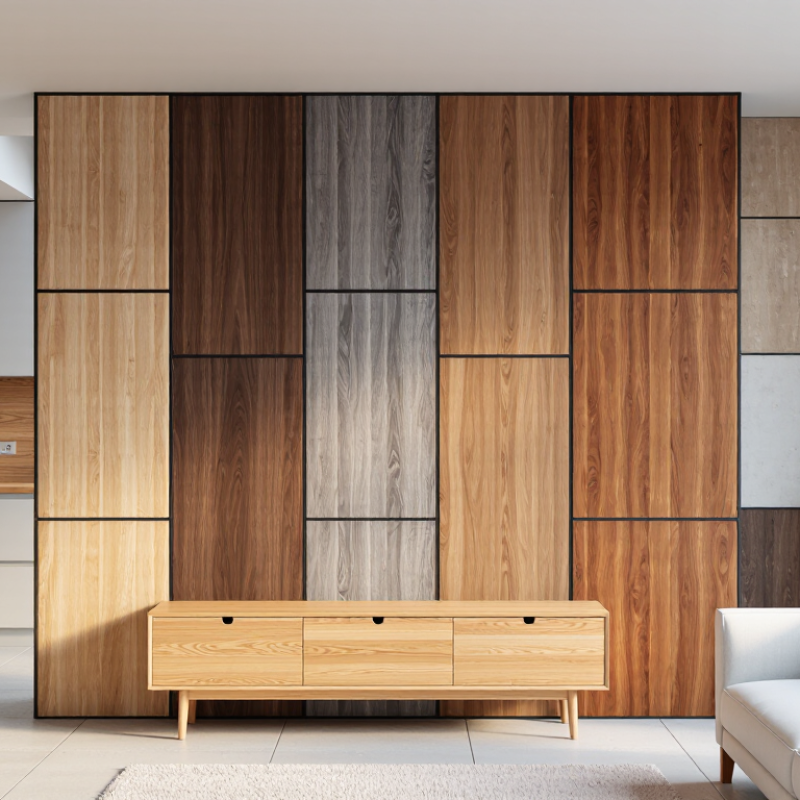
Faux wood wall panels are manufactured surfaces designed to suggest timber’s grain, color, and depth without using solid boards throughout. They may be made from PVC, engineered wood, foam, or composite materials; construction differs by product. Some use printed decorative film, while others are molded with raised grain or a textured coating. Not real timber.
During production, a substrate is cut or extruded, then covered, pressed, or molded to create the visible finish. Embossing can add shallow ridges, and a protective layer may help the surface resist ordinary scuffs. That protection is not unlimited. Sunlight, heat, humidity, and cleaners can affect color or shape. Check the technical sheet for indoor use, care instructions, and fire or moisture ratings.
For a believable result, compare a sample in the room’s actual light and view it from close range. A printed grain may repeat, and seams can reveal the panel’s artificial look. Small details matter. Panel weight and backing matter too: lightweight sheets may need a flatter wall and compatible adhesive, while heavier boards often require mechanical fasteners. Installation guidance varies by material, so one method may not suit every panel.
2026 Top Faux Wood Wall Panels: Which Type Is Best?
Typical density ranges of common faux-wood panel core materials
Faux-wood panels can use foam, plastic, composite, or fiberboard cores, finished with printed or embossed wood grain. Lower-density foam panels are lightweight; MDF, PVC, and wood-plastic composite cores are denser. These approximate material density ranges are not finished-panel weights, and actual values vary by formulation and construction.
The Main Types of Faux Wood Wall Panels Available in 2026
The main faux wood wall-panel types in 2026 differ in core material, weight, and moisture tolerance. PVC panels are lightweight and easy to wipe clean, making them practical for splash-prone rooms when the product is rated for that use. WPC panels combine wood fiber and plastic; they often feel more substantial, but their exact composition and performance vary. MDF panels with printed or laminated woodgrain offer a smooth indoor finish. Molded polyurethane panels can add deeper, carved-looking texture without the weight of solid timber.
Market context helps, but needs careful reading. Grand View Research estimated the global wood-plastic composites market at about US$7.4 billion in 2023 and projected growth through 2030. That report covers many applications, not wall panels alone, so it does not prove which wall-panel type is most popular. In practice, inspect a sample under your room’s lighting: a printed grain can look convincing up close, or oddly repetitive. Check the core, edge sealing, installation method, and product-specific fire and moisture documentation before buying.
Tips: Match the panel to the room, not just the photo. In humid spaces, verify suitability and seal cut edges as directed. For rentals or quick refreshes, lightweight panels may be easier to handle; still, uneven walls can expose gaps. I would not assume “water-resistant” means waterproof.
How Panel Materials Compare in Appearance, Durability, and Cost
Choosing faux wood wall panels means balancing appearance, durability, and price—not just picking the most convincing grain. PVC panels resist moisture, making them practical for kitchens or damp basements, but their printed finish can look flat under strong side lighting. MDF panels often have deeper textures and accept paint evenly. However, water can swell an unsealed edge. Looks matter. Polyurethane panels can create crisp, carved details while staying lightweight, though they may dent more easily than denser boards.
Tips:
View samples beside a window and under evening lamps. Check the cut edges, not only the front. Ask for installed-area pricing, since trim, adhesive, and labor can change the total.
PVC is often a lower-cost, easy-care option; MDF commonly offers a middle ground in texture and price. Detailed polyurethane panels may cost more, especially when installation requires careful fitting. These are broad patterns, not guarantees: thickness, finish, and local labor all affect cost. I would not choose from a tiny sample alone; that is an easy mistake. A full panel can reveal repeating grain, visible seams, or a sheen that feels too plastic for the room.
Which Faux Wood Panel Type Fits Each Room and Project
The best faux wood wall panel depends on the room’s moisture, traffic, and installation surface. For living rooms and bedrooms, MDF panels offer crisp grooves and a painted or wood-look finish; they suit dry walls, but swollen edges are hard to repair. In laundry rooms or damp basements, consider PVC or WPC panels labeled for those conditions. Do not assume “water-resistant” means suitable inside a shower. For ceilings or quick accent walls, lightweight polyurethane panels are easier to handle, though dents may show.
Budget and labor matter. The 2024 U.S. Houzz & Home Study reported a median renovation spend of $24,000 for projects completed in 2023. That figure covers whole-home renovations, not wall panels, but it shows why comparing material, trim, and installation costs is useful. A small test panel can reveal color shifts under warm bulbs. It can also expose an uneven wall before the full order arrives. My own caution: easy installation does not always mean easy removal.
Tips: Match the panel’s moisture rating to the room, seal cut edges where required, and check the substrate for dampness first. In bathrooms, keep panels outside direct-splash areas unless the manufacturer specifies otherwise. Leave expansion gaps when the installation instructions call for them.
Key Factors to Check Before Choosing and Installing Panels
Choosing the best faux wood wall panels starts with the room, not the finish. For bathrooms or laundry areas, check the panel’s moisture rating and whether its core can tolerate occasional splashes. MDF panels can swell when water reaches exposed edges, while some plastic panels may expand with heat. Dry living spaces offer more options, including lightweight polyurethane and engineered wood designs. Read the product specifications; a wood-like surface alone says little about durability.
Check panel weight, thickness, and installation method against your wall. A slightly uneven plaster surface may need preparation before panels sit flat. Confirm that the wall is clean, dry, and structurally sound, then follow the manufacturer’s guidance for adhesive, fasteners, and expansion gaps. Measure around outlets and corners before cutting. It is easy to underestimate those details.
Tips: Order a sample and view it in morning and evening light. Test the finish near existing trim, and inspect panel edges for an obvious seam. Keep a small offcut for later repairs. I once assumed a warm oak tone would match a room, but the cooler lighting made it look gray; samples can still surprise you.